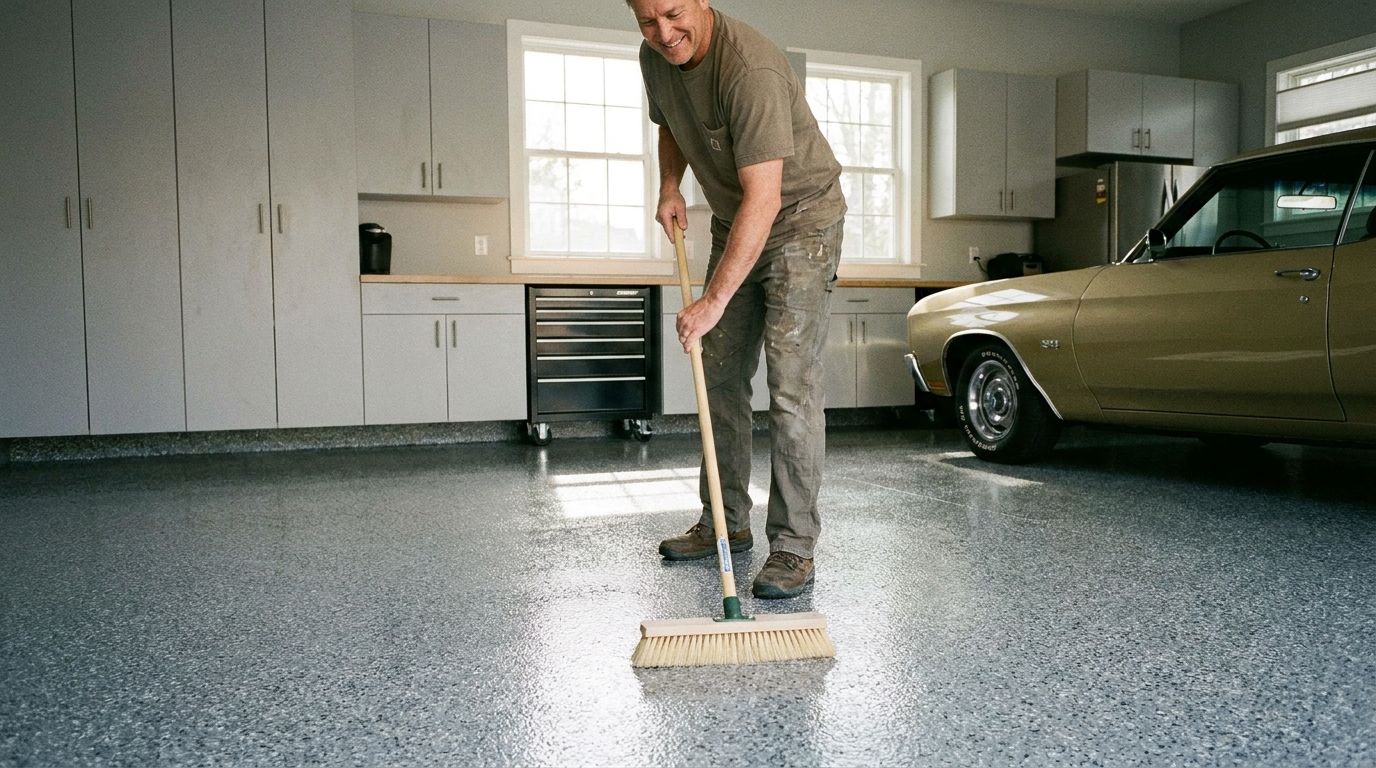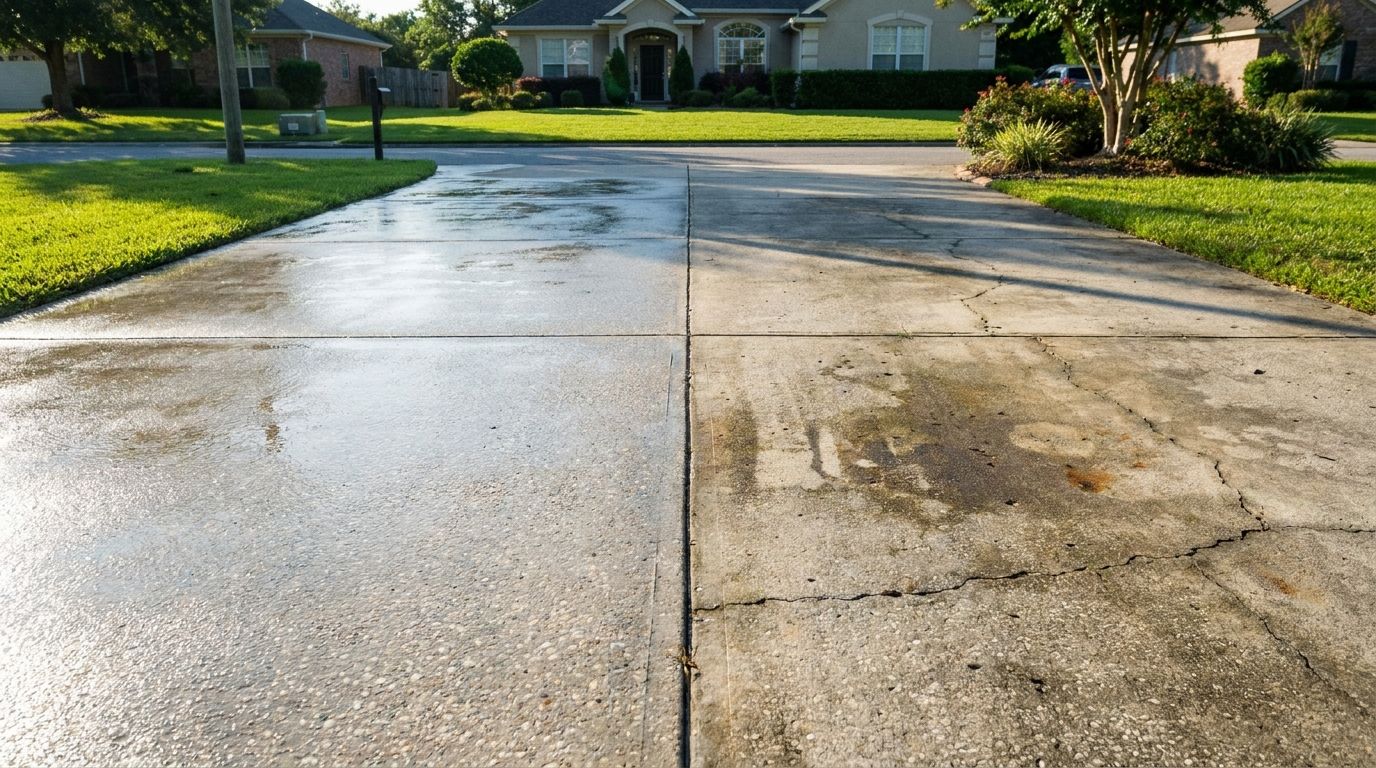
Best Concrete Coatings for Hot Weather & Humid Climates: What to Know Before Summer Hits
The best concrete coating for hot weather is a UV-stable polyaspartic or polyurea system. Both resist the yellowing and softening that high heat causes in standard epoxy. In Northwest Arkansas, where bare slabs can hit 130 to 150°F in summer sun, that gap decides whether a patio coating still looks new in August. At 12 Point Concrete Coatings, we install these heat-tolerant concrete coating systems on outdoor surfaces across Bentonville, Rogers, and Fayetteville.
Most homeowners assume any coating helps with summer heat, but color and chemistry matter far more. A light, reflective polyaspartic can run roughly 10 to 25°F cooler than a dark, uncoated slab in full sun, while standard epoxy holds heat instead. Which systems stay cool and hold their color through an Arkansas July, and which soften and yellow? The breakdown ahead sorts them out, then explains how to time your install for the best results.
Why Heat and Humidity Break Down the Wrong Coating
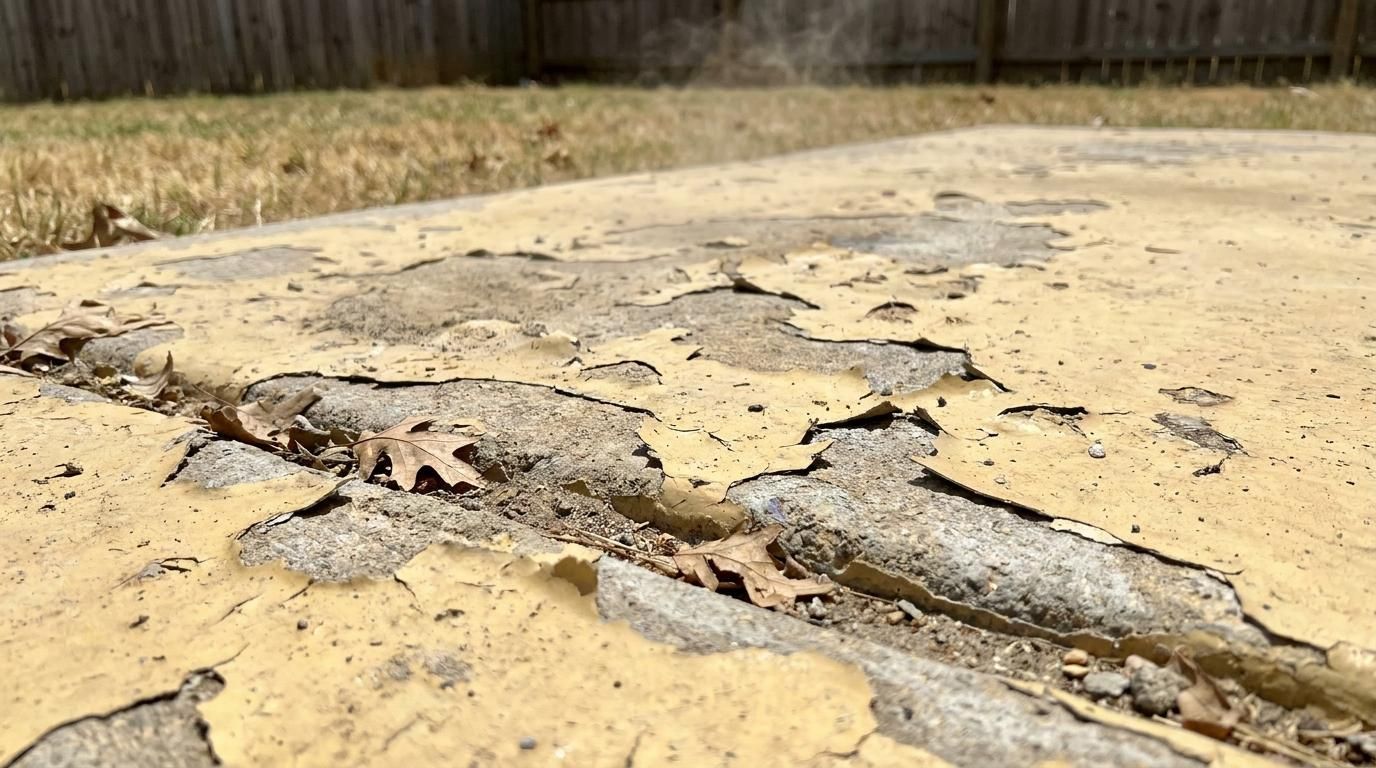
High heat and humidity attack a coating while it cures and after. Epoxy is a rigid, petroleum-based film, and that rigidity is its weak point in heat.
- Softening in the sun: epoxy softens as surface temperatures near its glass-transition range, roughly 120 to 140°F, letting hot tires lift it in a failure called hot-tire pickup.
- Yellowing under UV: most epoxy is not UV-stable, so a sunlit patio can turn amber within a season.
- Amine blush in humidity: applied in muggy air, epoxy reacts with surface moisture and forms a hazy film that weakens adhesion.
Coatings Built to Take Arkansas Summers
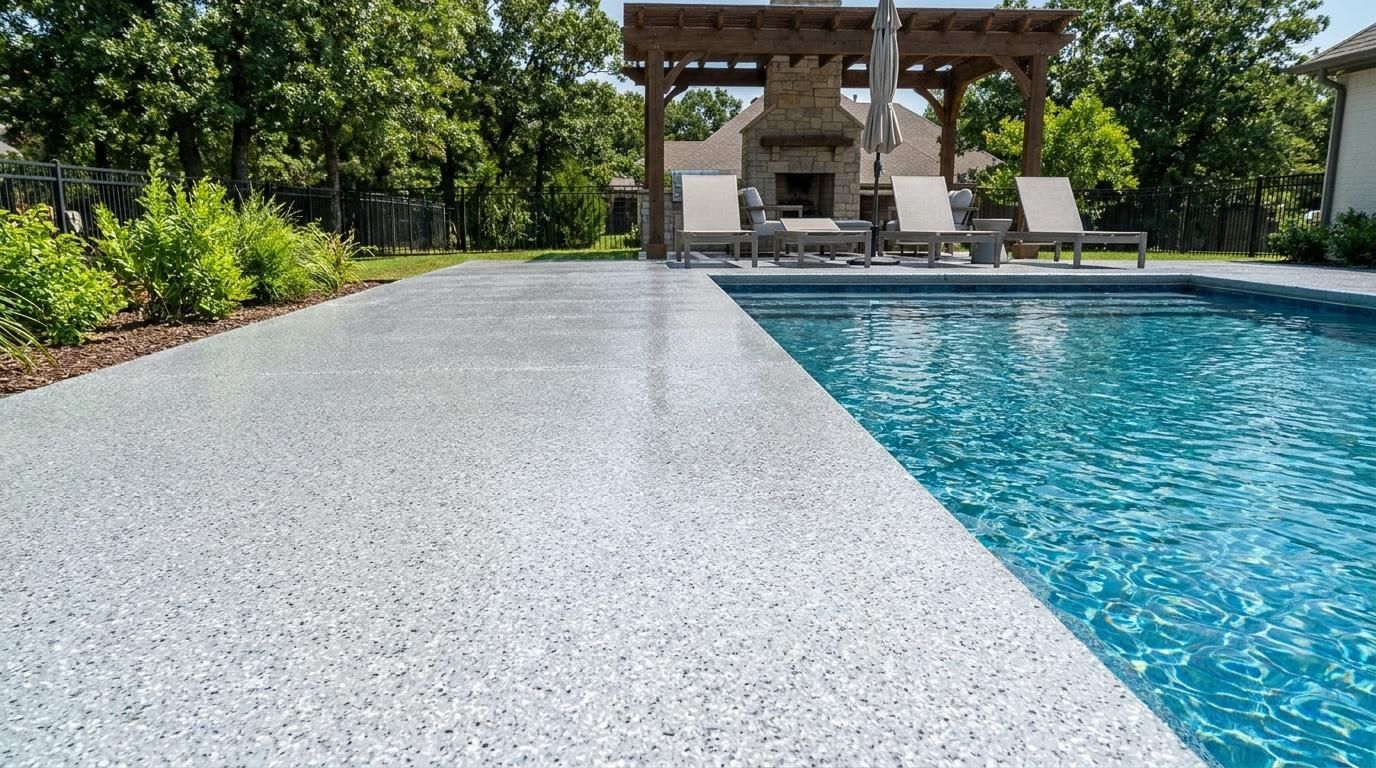
For heat and UV, two systems beat epoxy outdoors, and both are what we install on patios and pool deck coatings.
- Polyaspartic: an aliphatic, UV-stable top coat that holds its color instead of yellowing, and in a lighter shade reflects sunlight to run cooler underfoot.
- Polyurea: a flexible base that stays stable across a wide temperature swing, expanding and contracting with the slab instead of cracking.
Together they resist fading, shrug off hot tires, and keep their slip-resistant texture around water.
Timing Your Install Around the Heat
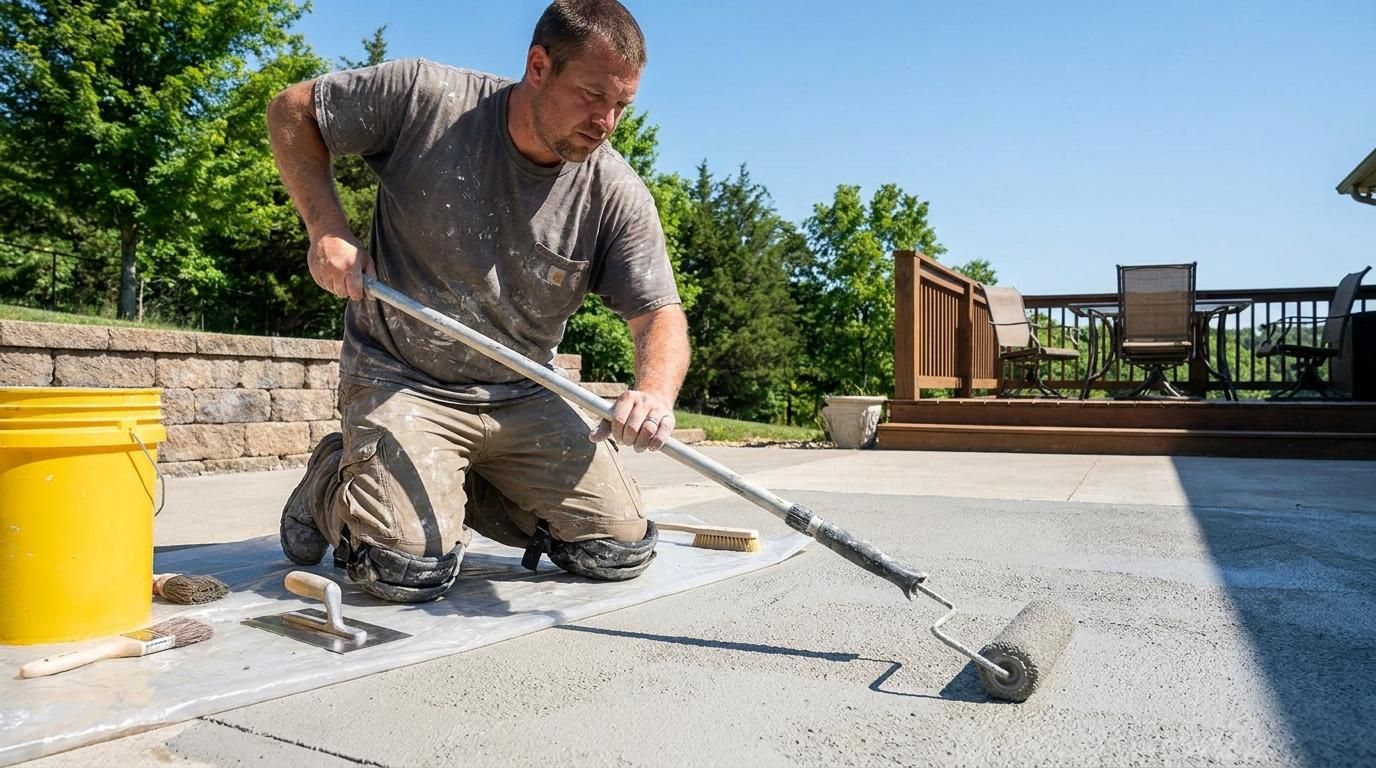
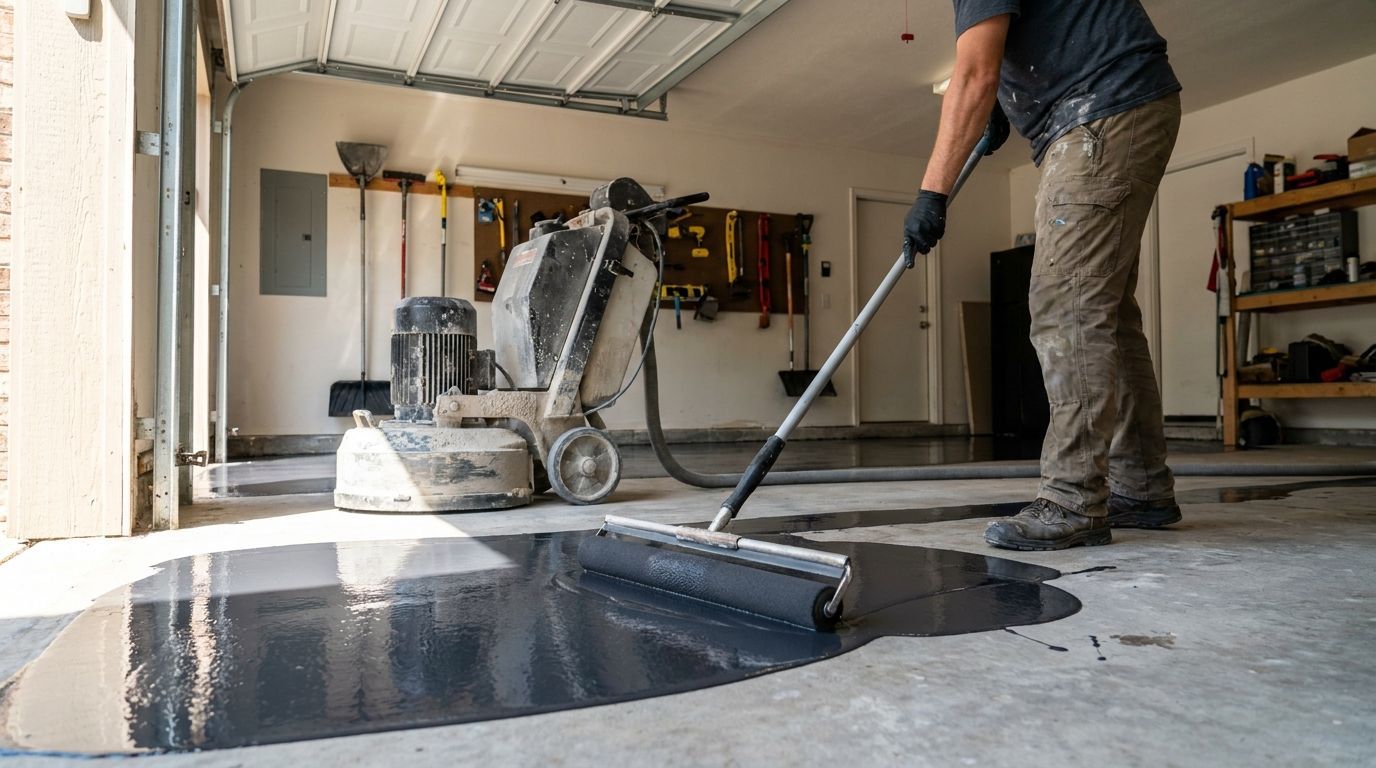
You do not have to wait for a perfect-weather window. Polyaspartic cures quickly across a wide range of conditions, so we install it year-round, even in cold months when epoxy struggles to set. In peak summer, our crews work around the hottest hours for an even cure.
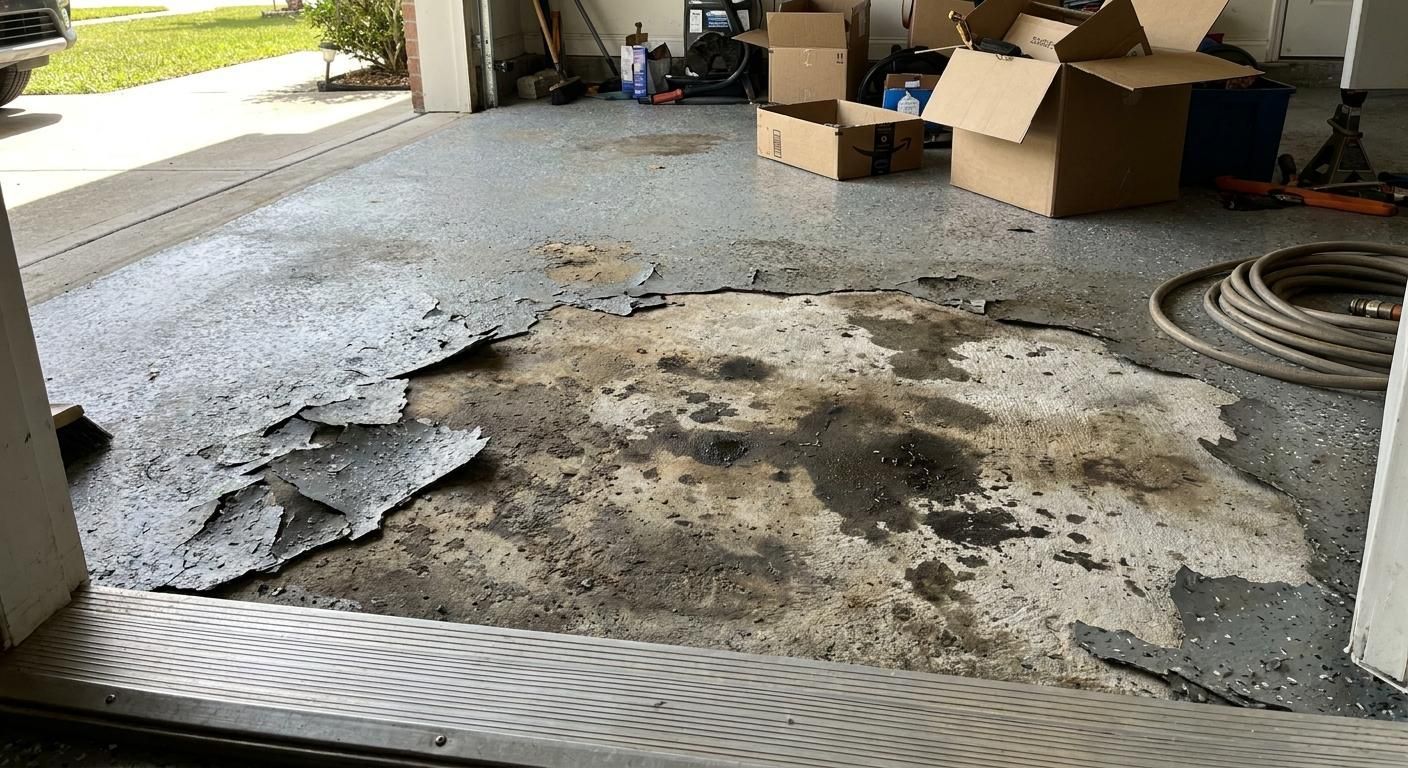
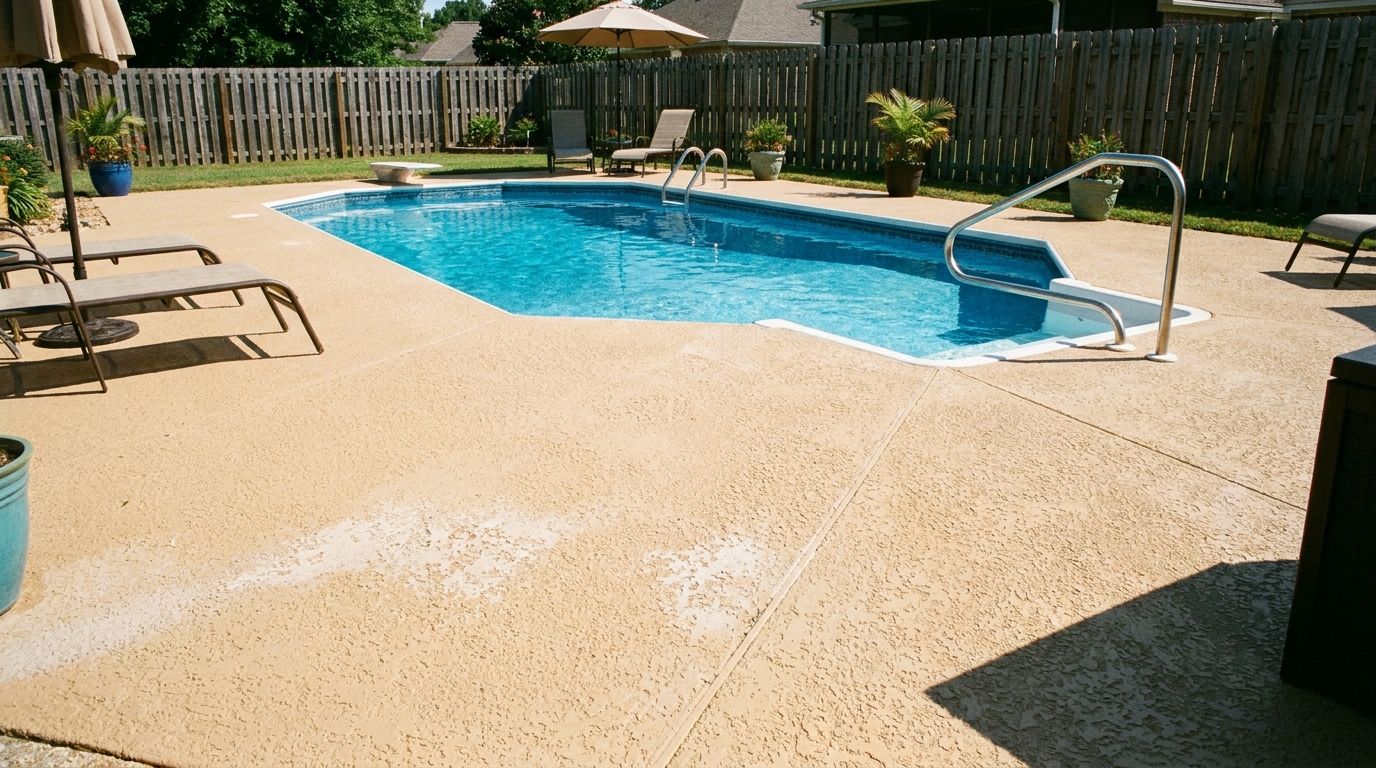
If your patio or pool deck already shows summer damage, peeling edges, faded color, or a chalky surface, that does not always mean a full tear-out. A spot repair on pool deck coatings often holds when the damage is shallow, while deeper failure calls for recoating.
Frequently Asked Questions
What is the best concrete coating for hot, humid climates?
A polyaspartic top coat over a polyurea base is the strongest fit for hot, humid climates. Polyaspartic is UV-stable, so it resists yellowing, and a lighter shade reflects heat. Polyurea flexes with the slab as it heats, avoiding the cracking and hot-tire pickup that affect rigid epoxy. The polyaspartic top coat also carries a lifetime no-yellow warranty from Valence Protective Coatings, which matters most on patios and pool decks that take direct sun all afternoon.
Does a concrete coating make a patio or pool deck cooler?
A concrete coating with a light, reflective polyaspartic finish can make a patio or pool deck cooler. This combination absorbs less sunlight than dark, bare concrete and can run roughly 10 to 25°F cooler. Dark coatings and standard epoxy hold heat instead, so color matters as much as coating type. On exposed patios and pool decks across Bella Vista and Northwest Arkansas, where slabs bake in full afternoon sun all summer, that difference is easy to feel underfoot.
Can concrete coatings be installed during an Arkansas summer?
Yes. Polyaspartic cures fast and works across a wide temperature range, so we install year-round and schedule summer jobs around the hottest hours for an even cure. Epoxy is fussier in heat and humidity, another reason that makes it the weaker outdoor pick. Most residential floors finish in a single day and are walkable within about 24 hours, with full vehicle traffic at 48 hours, so a summer install rarely costs you more than a single day of access.
Beat the Heat Before Summer Sets In
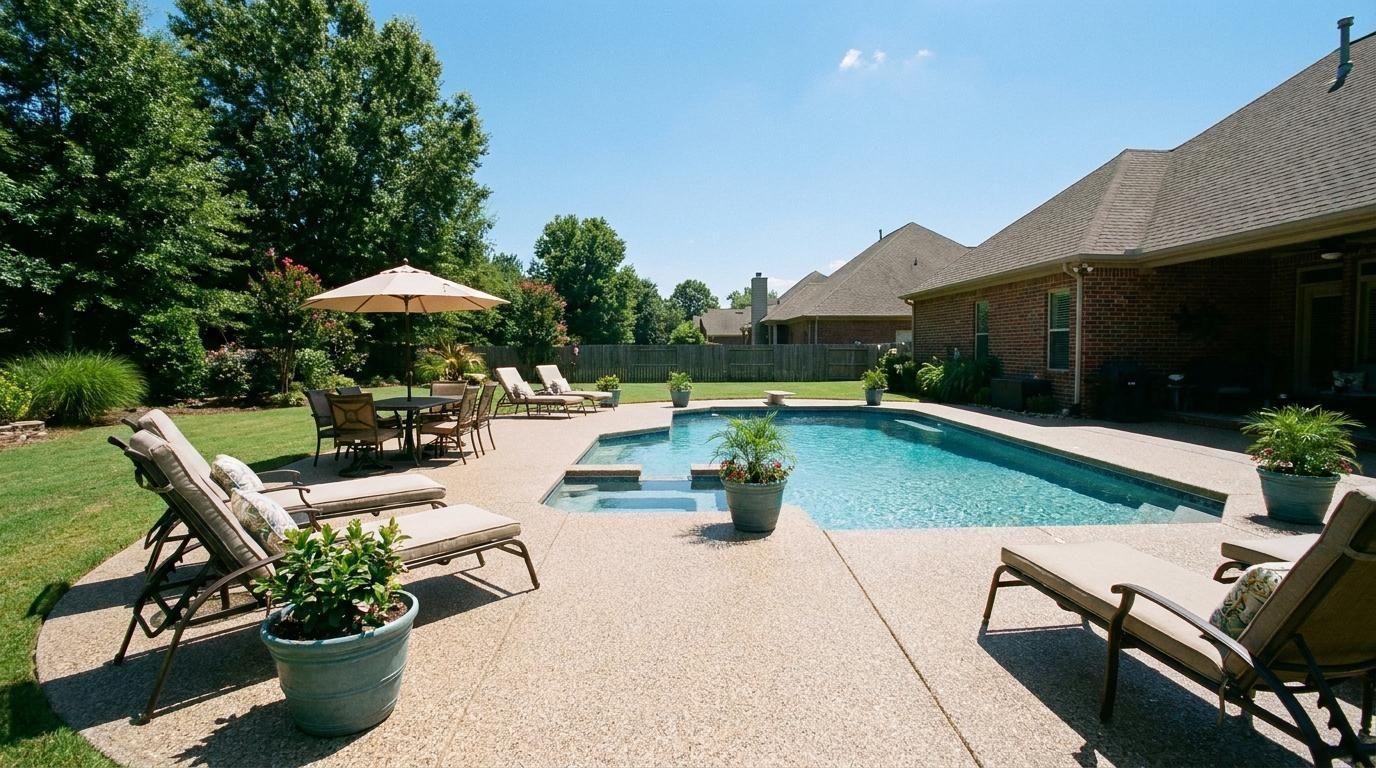
In our climate, the coating that wins is built for UV and heat from the start. A light-colored, UV-stable polyaspartic over a flexible polyurea base stays cooler underfoot, holds its color, and resists hot-tire pickup. Epoxy and DIY kits look great in spring, but a single Arkansas summer usually reveals which one belongs outdoors. Backed by a 15-year warranty from Valence Protective Coatings, our polyurea-polyaspartic system holds its finish throughout repeated Arkansas summers instead of fading or softening after the first one.
If you want your patio or pool deck coated before the heat peaks, call us at (479) 789-0812 or request a free quote online, and we’ll recommend the right system for your space.