Commercial Kitchen Floor Coatings in Northwest Arkansas: What to Consider Before Installing
A commercial kitchen floor takes a beating that most other surfaces never see. Grease splatter, standing water, hot washdowns, rolling carts, and nonstop foot traffic hit the same stretch of concrete every single shift. 12 Point Concrete Coatings offers commercial concrete coatings for commercial kitchens, breweries, restaurants, and food-production facilities across Northwest Arkansas, including Bentonville, Rogers, Fayetteville, Springdale, and Bella Vista, using polyurea and polyaspartic systems. Before committing to a coating, it helps to understand what the floor actually needs to handle, what local food-service rules expect, and what has to happen underneath the coating before it ever goes down.
Match the Floor System to the Zone, Not Just the Kitchen
Not every square foot of a commercial kitchen faces the same conditions, so the right coating decision starts with the specific zone rather than the business type as a whole. A dry storage room, a dining floor, a cook line, and a dish pit can sit under the same roof and still need entirely different considerations.
- Dry storage and office areas with light, infrequent traffic
- Prep and cook line surfaces exposed to grease, oil, and food acids
- Dish pits and warewashing stations that see frequent water flushing
- Walk-in coolers and freezers with temperature cycling and moisture
Treating a hot washdown area the same as a dry storage room is a common mistake. Food-service areas facing regular grease, moisture, chemical exposure, pressure washing, traffic, or thermal cycling need a system selected around those specific conditions, not a one-size-fits-all approach.
What Arkansas Food-Service Floor Rules Expect
A seamless coating is only part of the picture. Arkansas retail food establishment rules require indoor floor materials to be smooth, durable, and easily cleanable, and floors in moisture-prone areas such as food prep, warewashing, walk-ins, restrooms, and spray-cleaned zones must also be nonabsorbent. Where water-flush cleaning is used, floors need to be graded to drains, equipped with floor drains, and connected to walls with coved, sealed junctures. In other areas, floor-to-wall junctures still need to be coved and tightly closed.
These standards are worth reviewing directly in the Arkansas Department of Health rules for retail food establishments and the FDA Food Code, since a coating alone cannot correct missing drainage or an unsealed floor-to-wall transition.
How a Polyurea-Polyaspartic System Fits a Commercial Kitchen
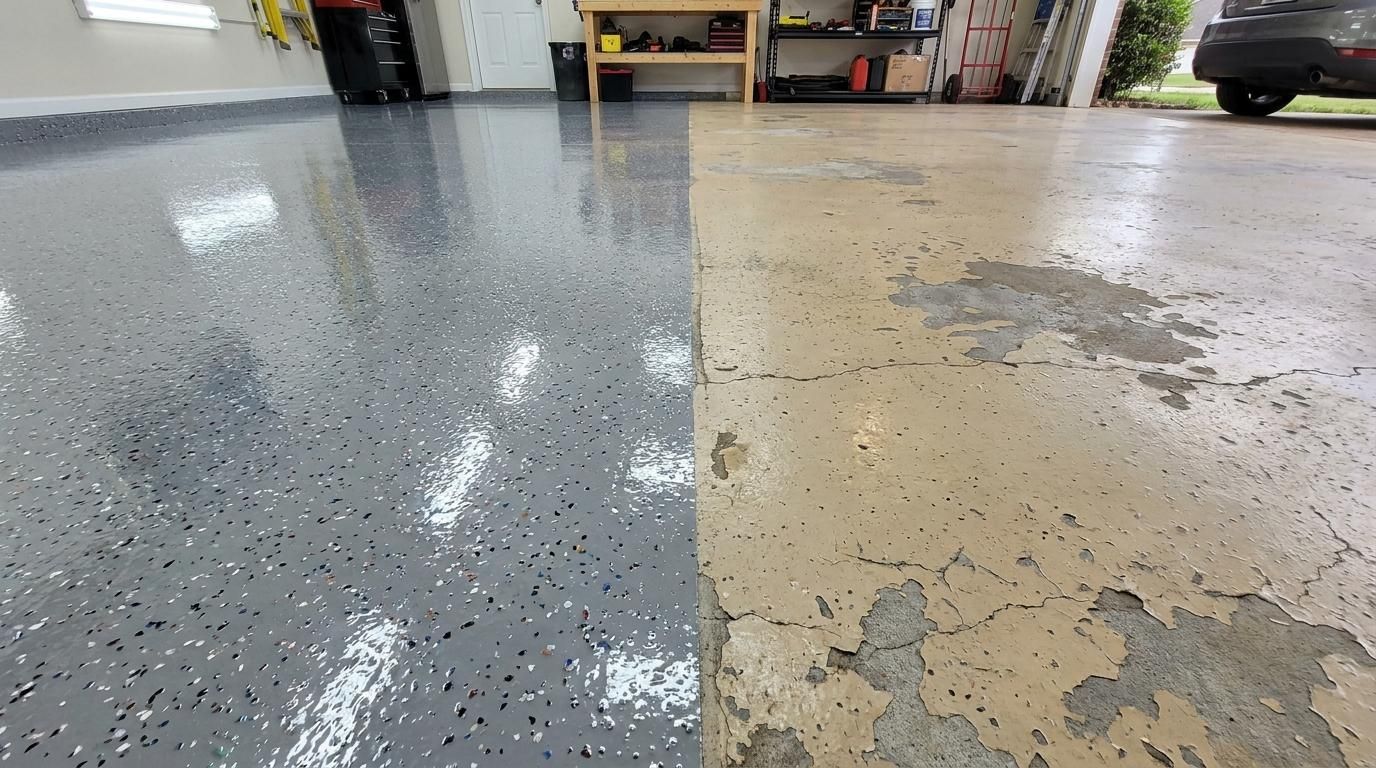
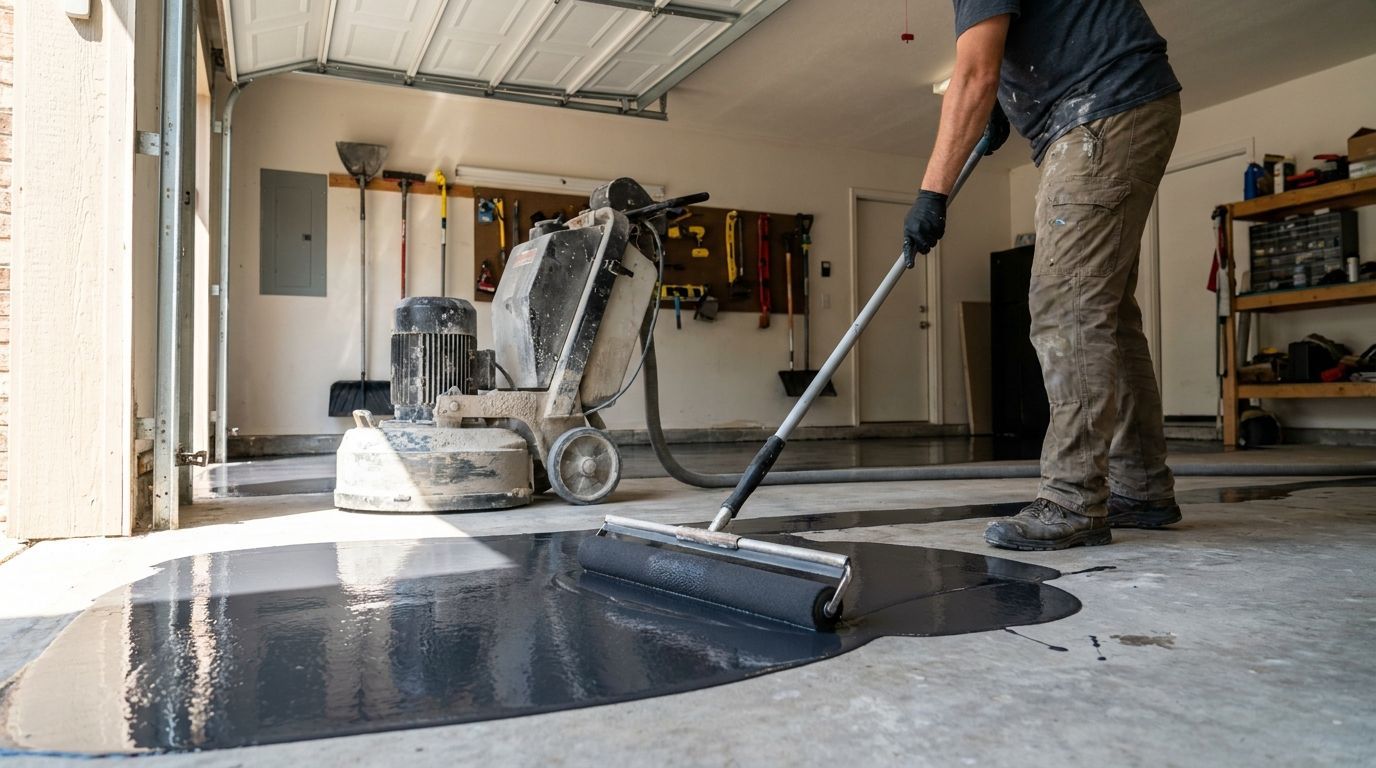
12 Point Concrete Coatings describes its commercial kitchen coatings as seamless, non-porous, stain-resistant surfaces built to resist grease, moisture, and chemical exposure, which supports faster cleanup between shifts. The system is a polyurea base with a polyaspartic topcoat: polyurea forms the flexible layer bonded to the prepared concrete, while polyaspartic serves as the UV-stable, stain-resistant protective finish. A closer look at how polyurea and polyaspartic work together covers this layered approach in more depth.
12 Point Concrete Coatings states that its polyurea and polyaspartic coatings are four times stronger than epoxy and backs installations with a 15-year warranty, with specific terms confirmed for each commercial project. Commercial installations are typically completed in one day and ready for use the next day, though the exact scheduling and return-to-service timeline for a given kitchen should be confirmed based on that project's conditions. More detail on the client's full commercial offering is available on the commercial concrete coatings page.
Substrate Condition and What Affects Project Scope
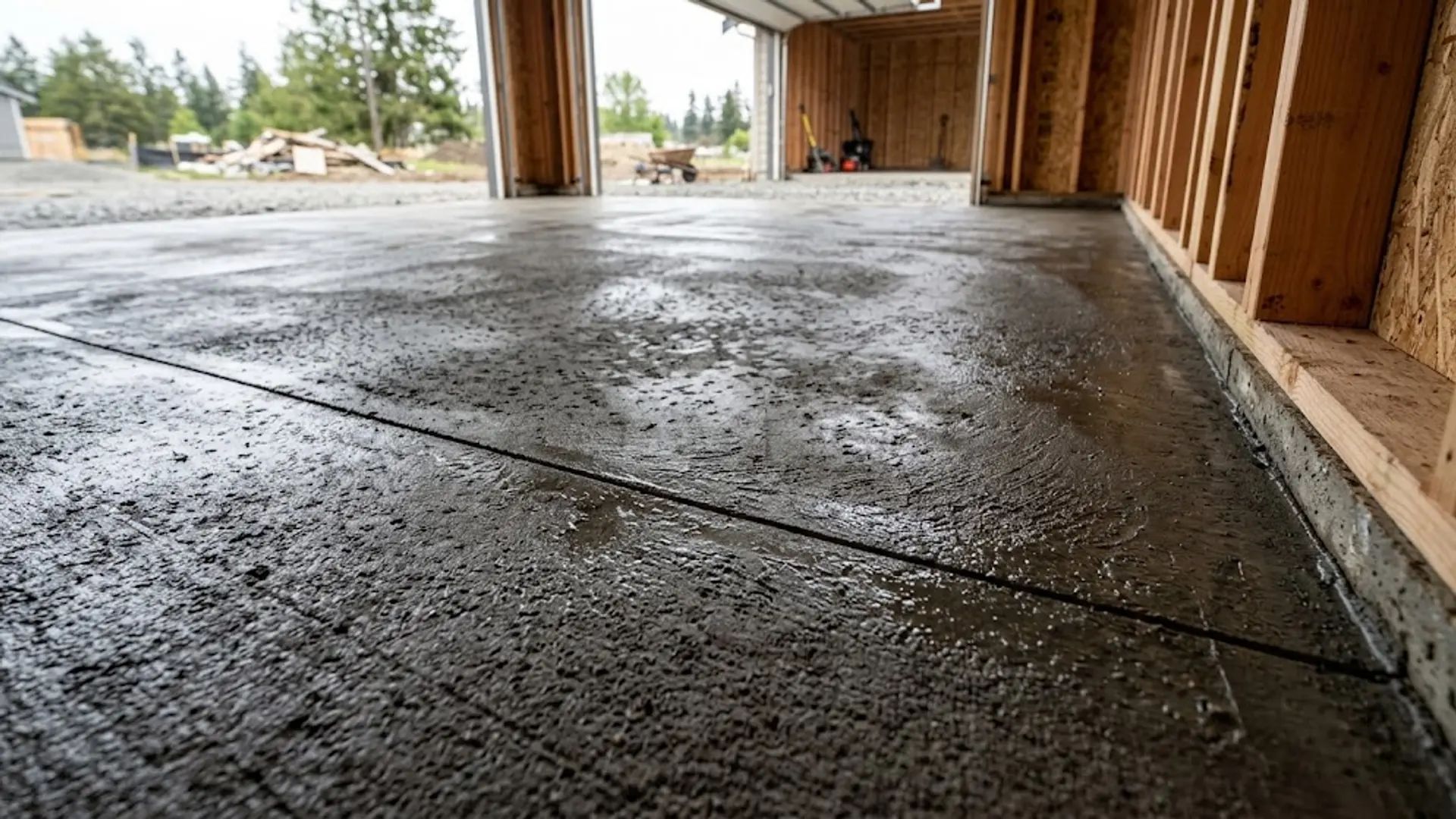
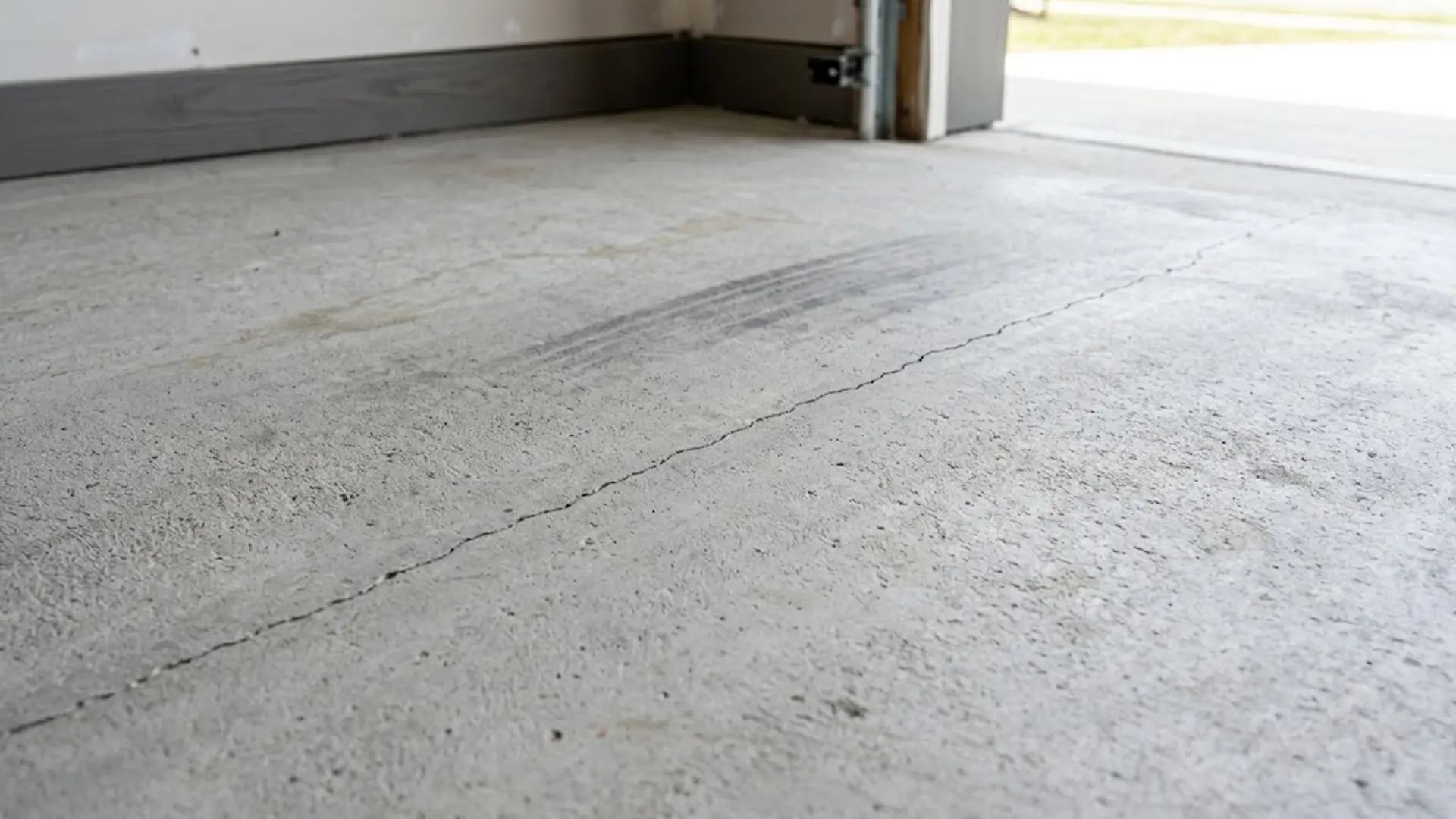
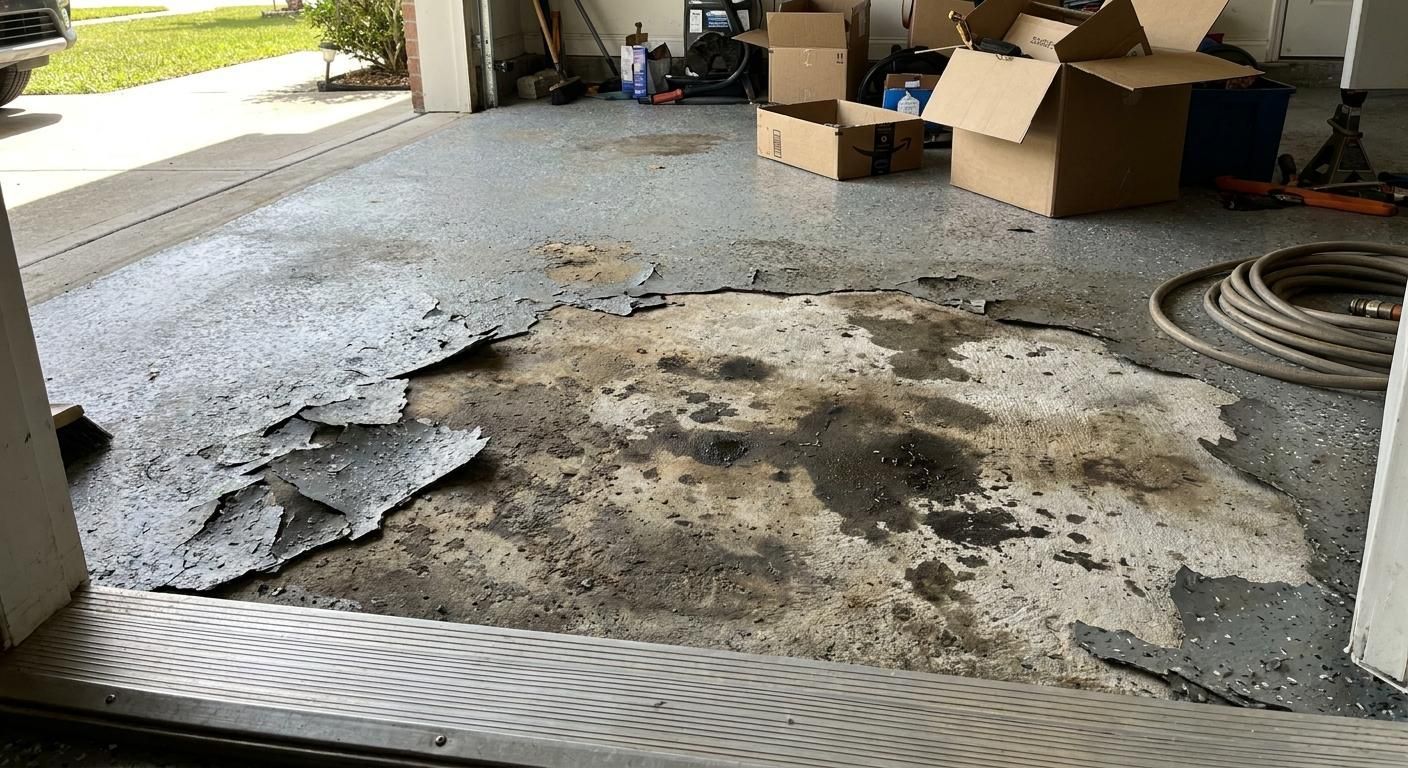
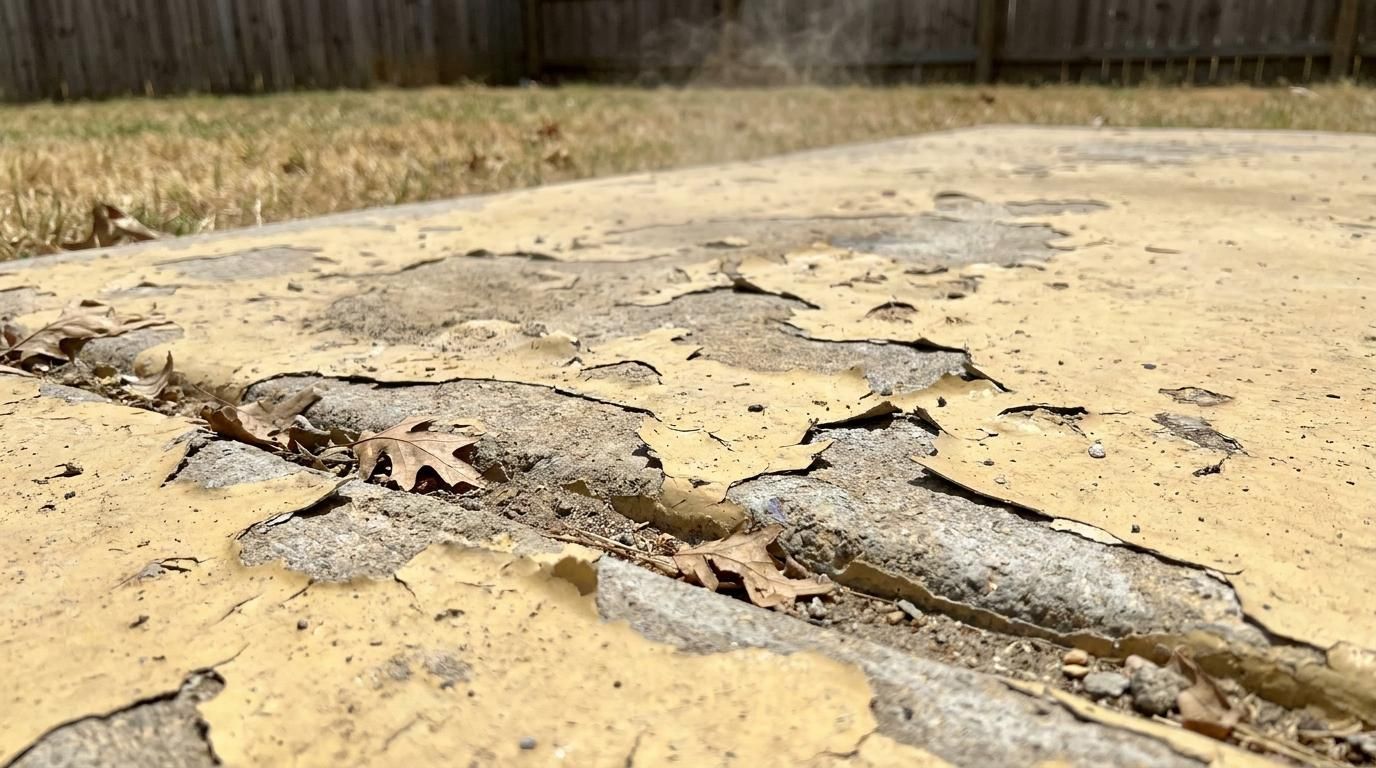
A coating is only as good as what it bonds to. Existing cracks, contamination, moisture pressure, and incomplete curing in the slab can all compromise how well a coating holds up, so the substrate needs to be evaluated before any coating goes down. New concrete generally needs around 28 days before it is ready to coat, which is worth planning for during a kitchen build-out or renovation, though final readiness should be confirmed from the slab's actual condition rather than the calendar alone. See when a new concrete slab is ready for coating for more on this.
Several factors can affect the scope and price of a commercial kitchen coating project:
- Slab repairs and mechanical surface preparation
- Contamination removal from oil, grease, or prior coatings
- Moisture conditions in the existing slab
- Drainage work and coved wall transitions
- The level of slip resistance needed for the space
Readers comparing coating systems more broadly can also review the guide to commercial and industrial concrete floor coating types.
Frequently Asked Questions
Does a seamless coating alone make a commercial kitchen floor health-code ready?
Not by itself. Arkansas rules also call for nonabsorbent surfaces in moisture-prone areas, proper drain grading, floor drains, and coved, sealed floor-to-wall junctures where water-flush cleaning is used.
What should be checked before choosing a fast-cure floor coating for a restaurant or brewery?
Substrate condition, moisture, drainage, the cleaning chemicals and method used, traffic levels, and the available shutdown window should all be confirmed before locking in a return-to-service timeline.
Can a newly poured commercial kitchen slab be coated right away?
New concrete generally needs around 28 days before coating, and final readiness should be based on the slab's actual condition rather than the calendar alone.
Talk to 12 Point Concrete Coatings About Your Commercial Kitchen Floor
If you are planning a coating for a restaurant, brewery, or food-production floor anywhere from Bentonville and Rogers to Fayetteville, Springdale, and Bella Vista, 12 Point Concrete Coatings can walk through what your specific kitchen zones need to handle. Call (479) 789-0812 to talk through your project.