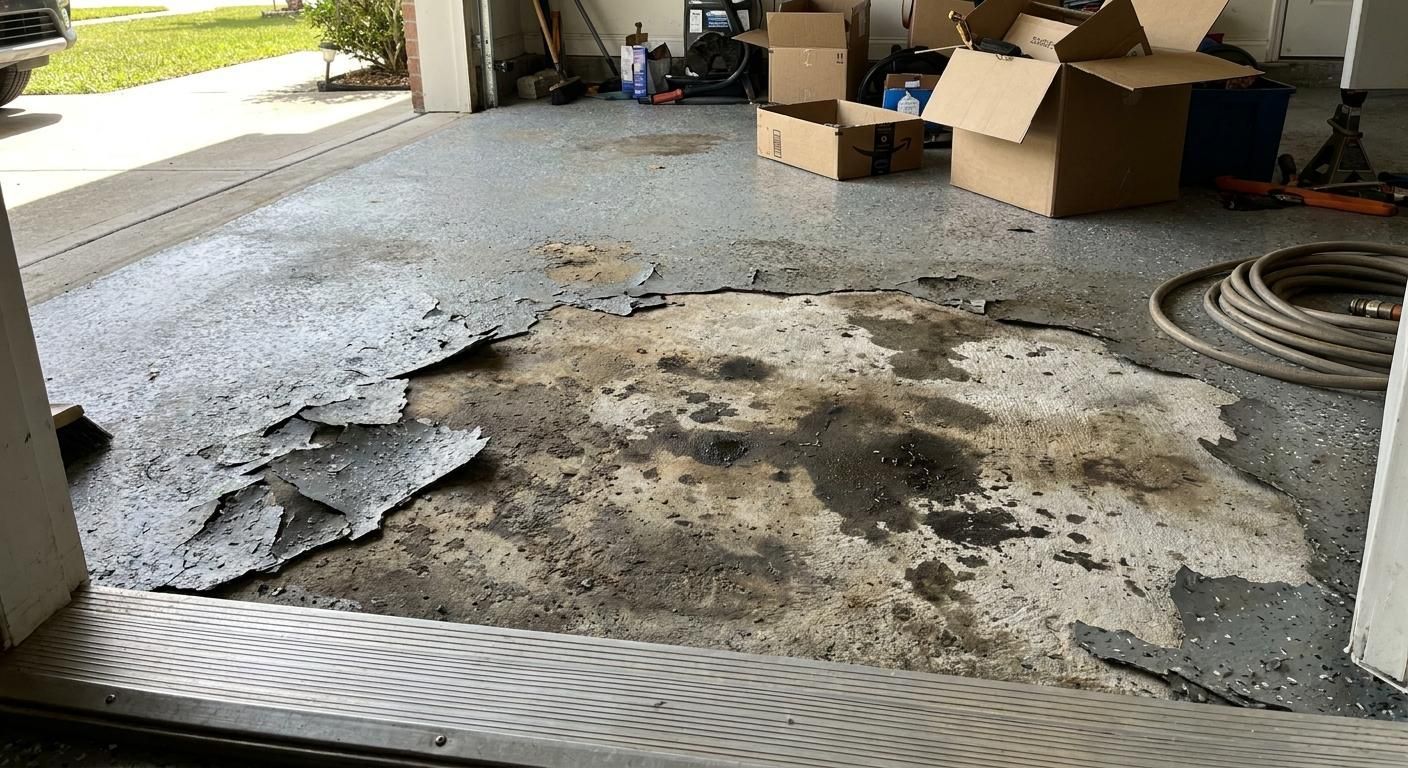
Can You Coat an Oil-Stained Garage Floor? What Northwest Arkansas Homeowners Should Know
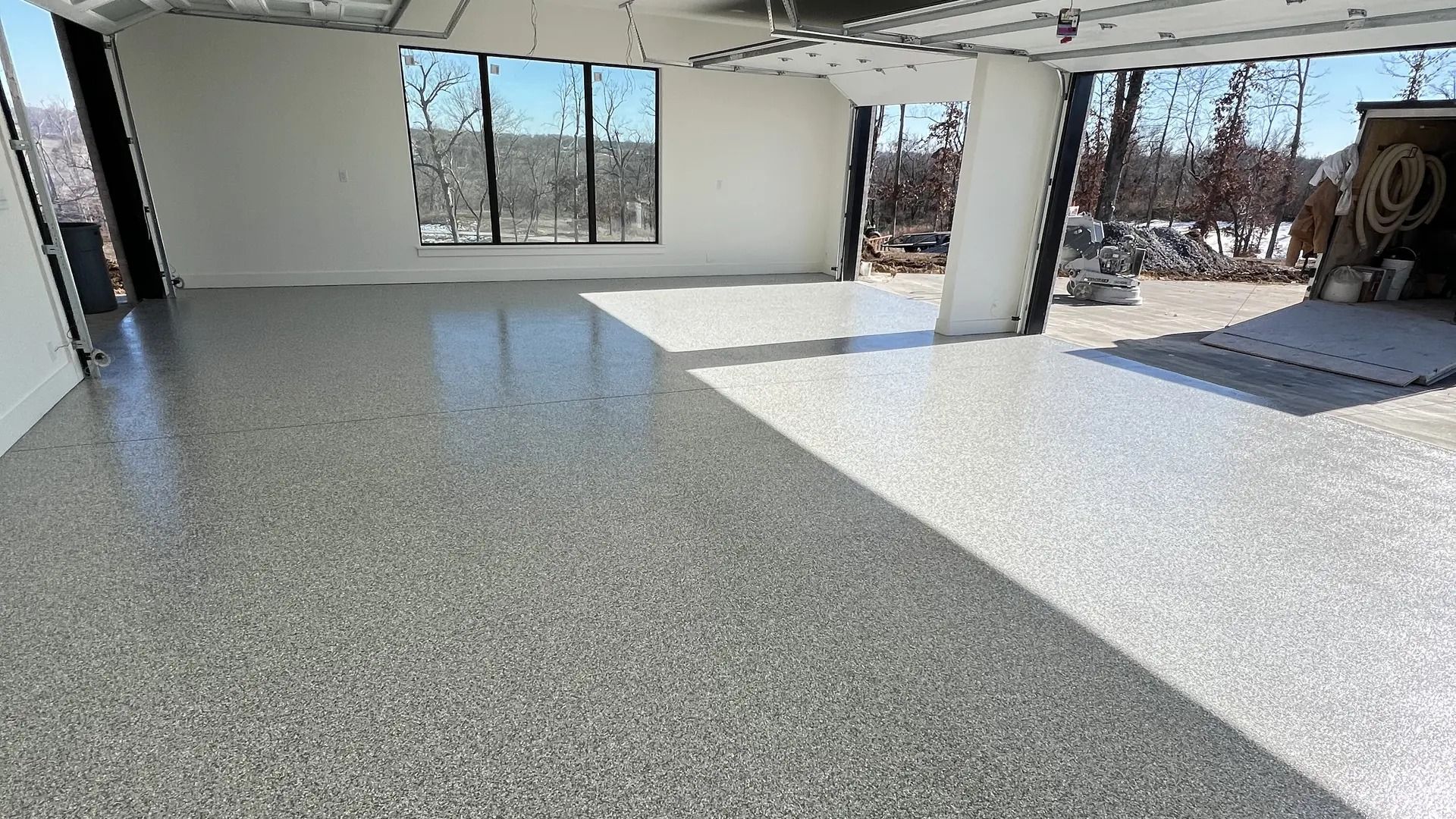
An oil stain on a garage floor does not automatically mean the slab is unfit for coating. What it does mean is that the floor needs a closer look before anyone commits to a finish. 12 Point Concrete Coatings offers garage floor coatings using polyurea, polyaspartic, and Valence systems for homeowners throughout Northwest Arkansas, including Bella Vista, Bentonville, Rogers, Springdale, and Fayetteville. For an oil-affected slab, the real question isn't whether a stain is visible. It's whether the concrete underneath can be brought to a condition that a coating will actually bond to.
Oil Stains Don't Automatically Rule Out Coating
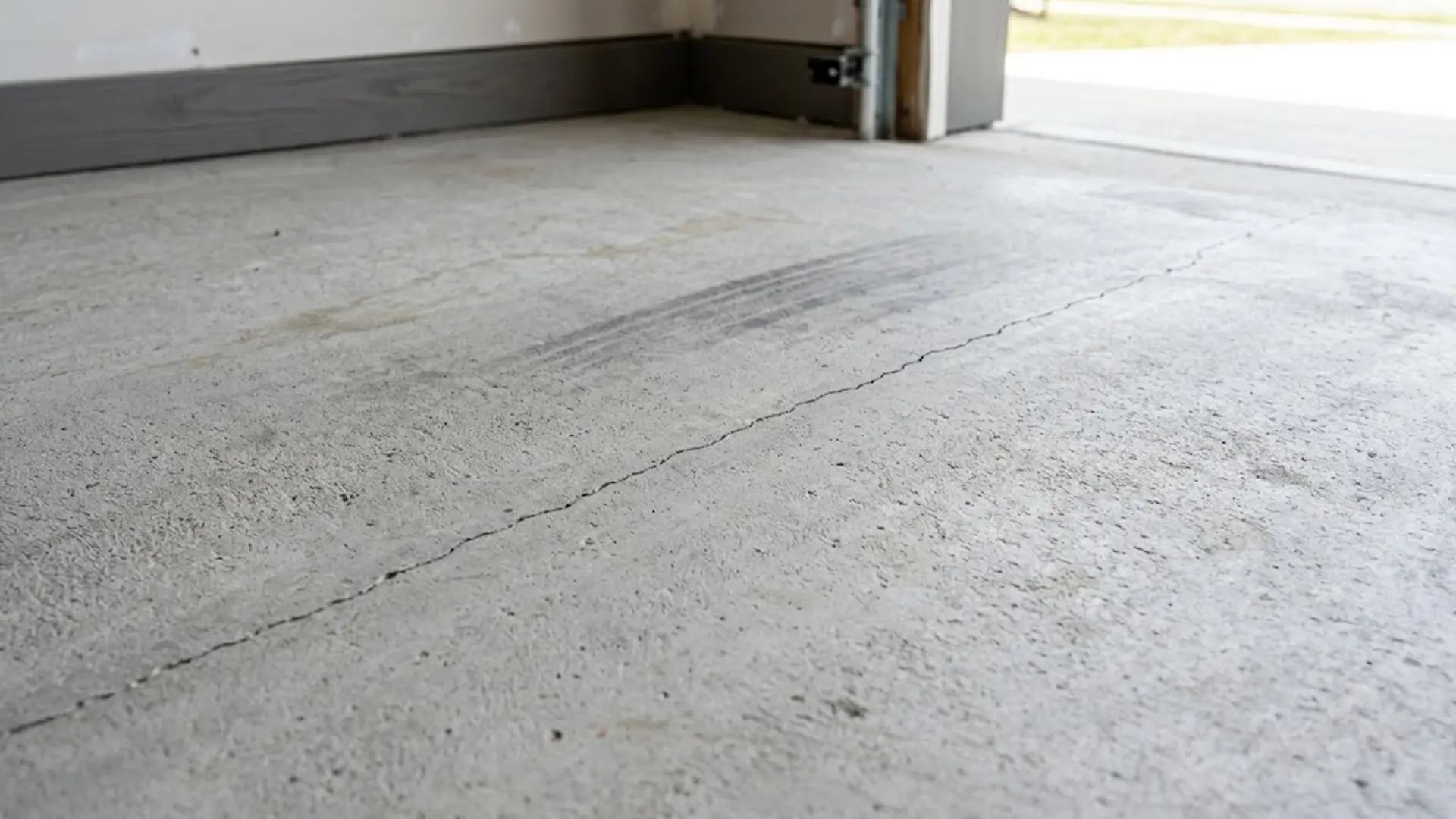
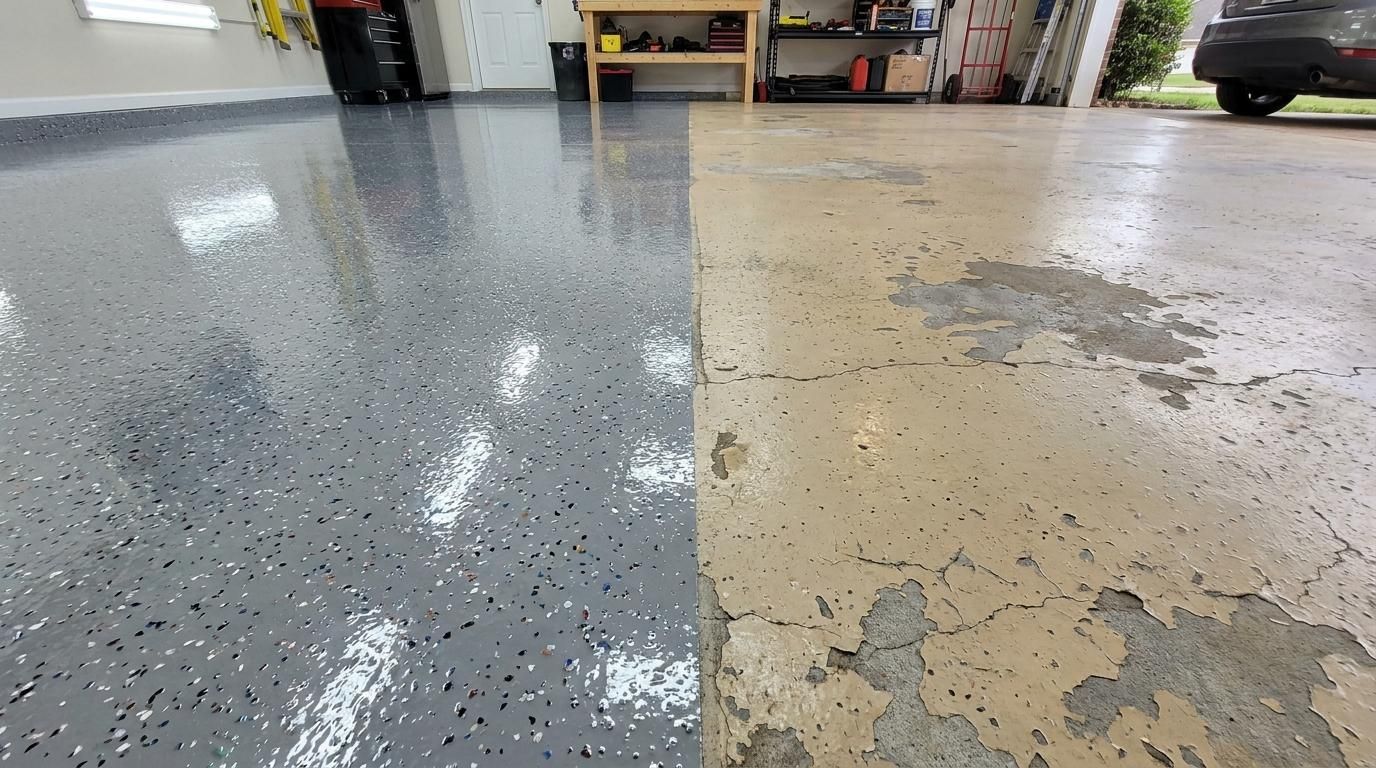
Discoloration on the surface and contamination within the concrete are two different problems. According to Sika's surface preparation guidance, decontamination and mechanical surface profiling serve different purposes: cleaning addresses contamination in the concrete, while profiling (typically through grinding or similar mechanical preparation) creates the texture a coating needs to adhere properly ( Sika, Surface Preparation Guide). Grinding a stained area alone doesn't necessarily resolve oil that has soaked into the slab.
That's also why the appearance of a stain isn't a reliable test on its own. Sika points to concrete porosity and how long a contaminant has been present as factors that affect how difficult it is to remove. A fresh spill wiped up quickly is a different situation than a spot where a vehicle has leaked in the same place for years. Both can look similar on the surface, but they may require different levels of preparation before a coating can be applied.
Why Covering a Stain Isn't the Same as Solving It
It can be tempting to treat a coating as a way to simply hide a stain. The problem is that contamination left in place doesn't just affect appearance; it affects adhesion. Sherwin-Williams' flooring documentation notes that surface contaminants can interfere with how a coating bonds, leading to defects such as fisheyes ( Sherwin-Williams, Resuflor Deco Quartz DB23 submittal package). In other words, a coating applied over unresolved contamination risks failing in ways that are more disruptive, and more expensive to fix, than the original stain ever was.
What This Means for Scheduling and Scope
Some qualifying garage floor projects can be completed in one day, but that timeline depends on the condition of the slab going in. An oil-affected floor may need additional time for decontamination, drying, or localized evaluation before coating work begins, so the one-day timeline isn't something every oil-stained slab should expect by default. Addressing contamination properly, rather than rushing past it, is part of what determines whether a project fits that faster schedule.
What a Professional Assessment Involves
At 12 Point Concrete Coatings, the approach to any coating project centers on proper surface preparation, selecting the right coating system for the situation, and applying it carefully. For an oil-stained garage, that starts with an honest look at the slab rather than an assumption based on how the stain looks. 12 Point Concrete Coatings is family-owned and owner-operated, with Chase personally involved in the company's work and installations.
Homeowners can make that assessment more useful by sharing what they know, such as:
- How the stain happened, if known (a single spill versus repeated parking in the same spot)
- Roughly how long the stain has been there
- Whether any cleaning products or treatments have already been used on it
- Whether the area still feels oily or different in texture from the surrounding concrete
That information helps determine whether preparation is routine or whether the slab needs a closer evaluation before coating moves forward. For a closer look at how preparation fits into the overall project, see how the coating process works.
When a Slab May Need More Than Standard Prep
Many oil-stained garage floors can still be prepared for coating. But Sika's guidance is direct about the limit: where contamination can't be fully removed, the affected concrete may need to be removed and replaced before coating can proceed ( Sika, Surface Preparation Guide). This isn't the outcome for every stained slab, but it's a realistic possibility homeowners should know about going in, rather than being surprised by it mid-project. Because the amount of preparation needed can vary, project scope and estimates can shift once a floor is assessed in person. For general budgeting context, 12 Point Concrete Coatings has also put together a guide on what affects concrete coating costs in Arkansas.
Understanding Your Warranty Coverage
It's worth knowing what a coating warranty actually protects against. 12 Point Concrete Coatings advertises a 15-year warranty covering qualifying coating failures, including peeling, chipping, and material defects. Separately, a Residential Limited Lifetime Warranty against UV yellowing and fading is available when qualifying Valence Protective Coatings products are used with the specified basecoat, mender, and full-flake broadcast. Both protections are subject to the applicable written warranty terms, exclusions, and registration requirements. Neither warranty is a substitute for proper preparation on a contaminated slab, which is part of why getting the assessment right up front matters.
Ready to Find Out If Your Garage Floor Qualifies?
If you're dealing with an oil-stained garage floor, the best next step is a straightforward assessment rather than guesswork. 12 Point Concrete Coatings serves homeowners across Northwest Arkansas, including Bella Vista, Bentonville, Rogers, Springdale, and Fayetteville, with garage floor coatings using polyurea, polyaspartic, and Valence systems. Call (479) 789-0812 to talk through your floor's condition and find out what preparation it needs.