Best Basement Floor Coating for Arkansas Homes: How To Choose the Right System
The best basement floor coating for Arkansas homes is a polyurea and polyaspartic system that blocks moisture, resists mold, and flexes with temperature swings. For NWA basements exposed to summer humidity and winter cold, these coatings outperform epoxy, floor paint, and sealer-only solutions. 12 Point Concrete Coatings installs moisture-blocking basement floors across Northwest Arkansas.
Northwest Arkansas summers carry significant humidity, and that moisture has to go somewhere. In a basement, it moves into the concrete slab, rising through capillary action and leaving a thin film of dampness that can ruin paint, trap odor, and encourage mildew. Any basement floor coating in NWA has to solve that moisture problem first. Everything else is secondary.
What Makes a Basement Coating Work in NWA’s Humidity?
A basement coating in Arkansas has to do three jobs: block moisture coming up through the slab, resist mold and mildew growth, and stay flexible enough to handle the temperature differential between a cool basement and warmer upstairs air.
Polyurea handles all three. It penetrates the concrete pores during installation, forming a non-porous barrier that helps block moisture from rising through the slab. Its flexibility helps it resist cracking as the slab expands and contracts with seasonal temperature changes. And because the finished surface is non-porous, it resists mold growth much better than porous surfaces. Our polyurea coating guide discusses the material science in detail.
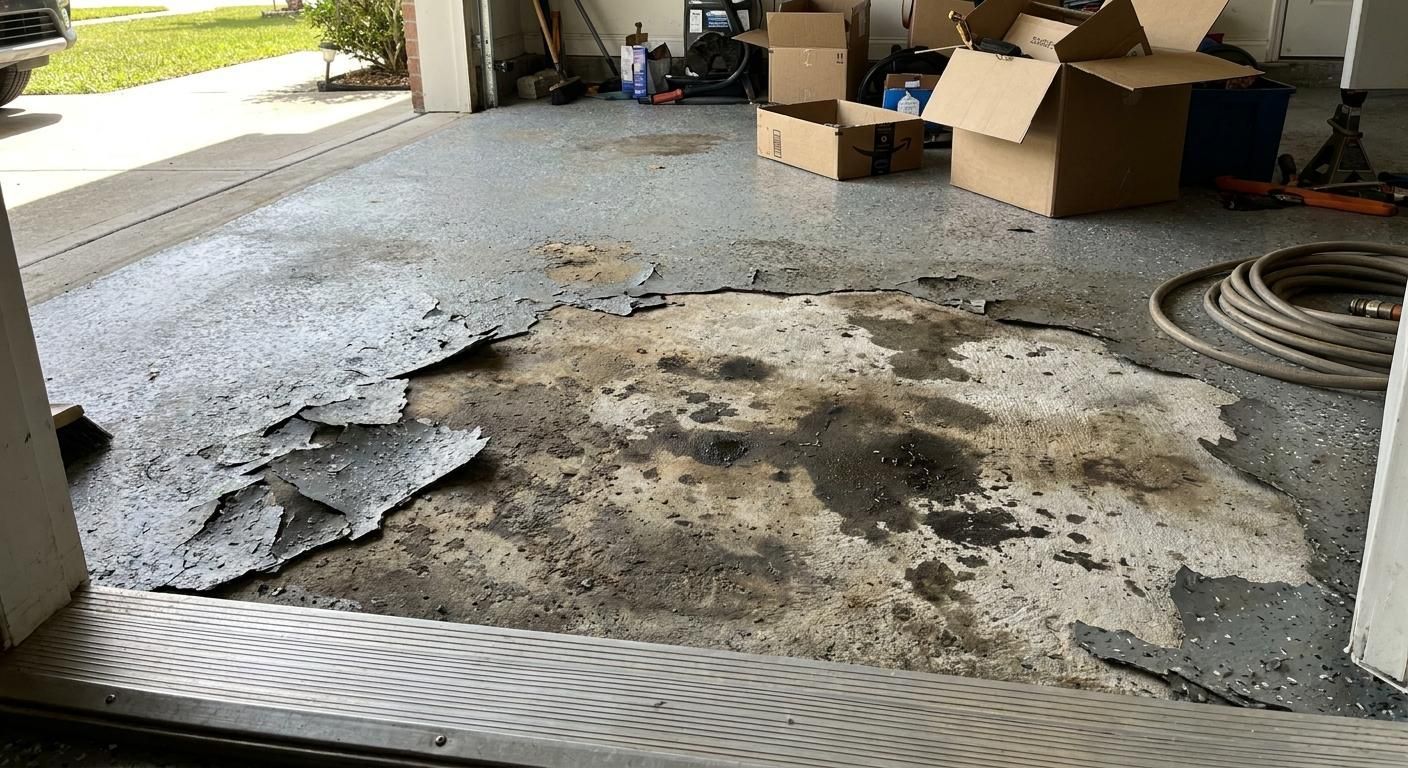
Epoxy, by contrast, is rigid and porous at the edges. In a damp NWA basement, epoxy can trap moisture behind the coating rather than blocking it—and the trapped moisture eventually breaks the bond. That's one of the most common basement floor coating issues we see when homeowners ask us to fix failed DIY or epoxy jobs.
Polyurea vs. Epoxy vs. Concrete Sealer
Homeowners usually weigh three categories of basement finish: paint, sealer, or a full coating system. Each has a specific use case.
Floor Paint
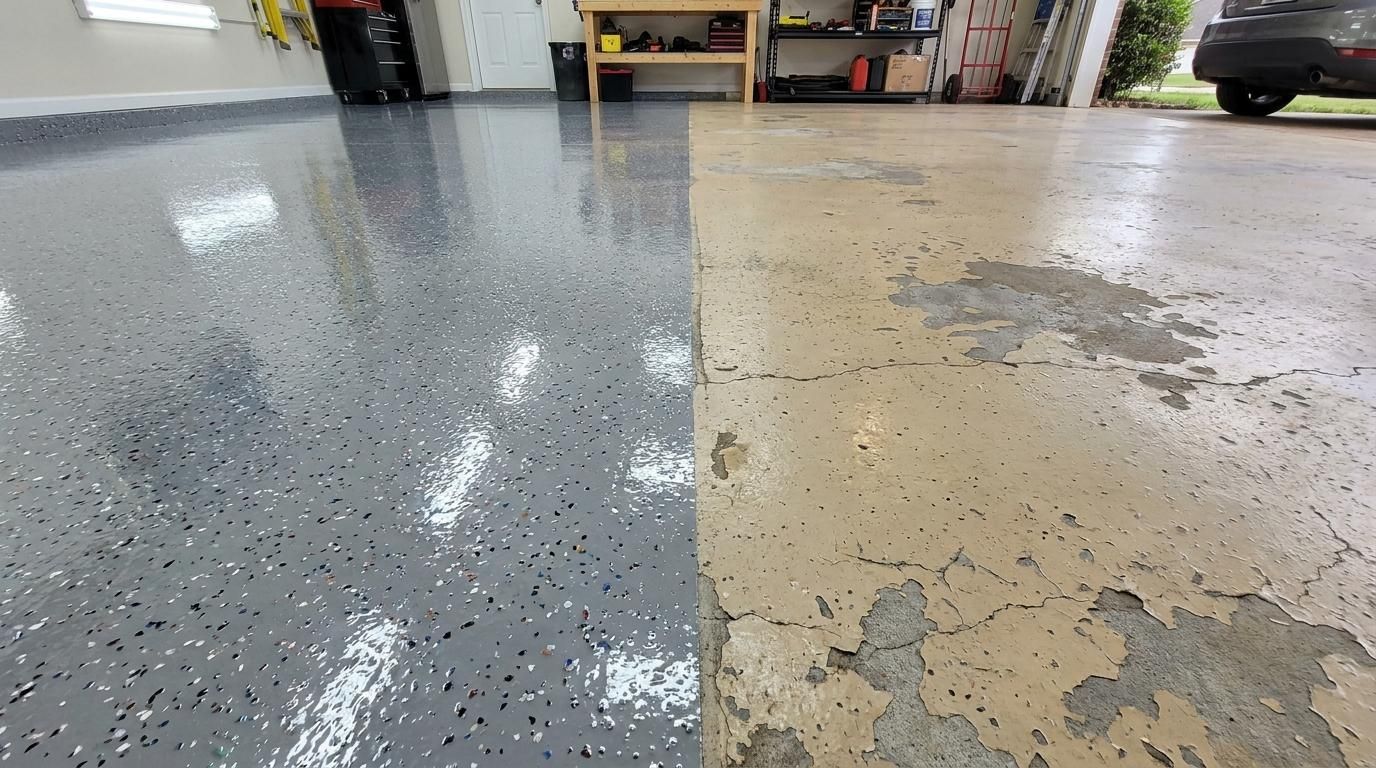
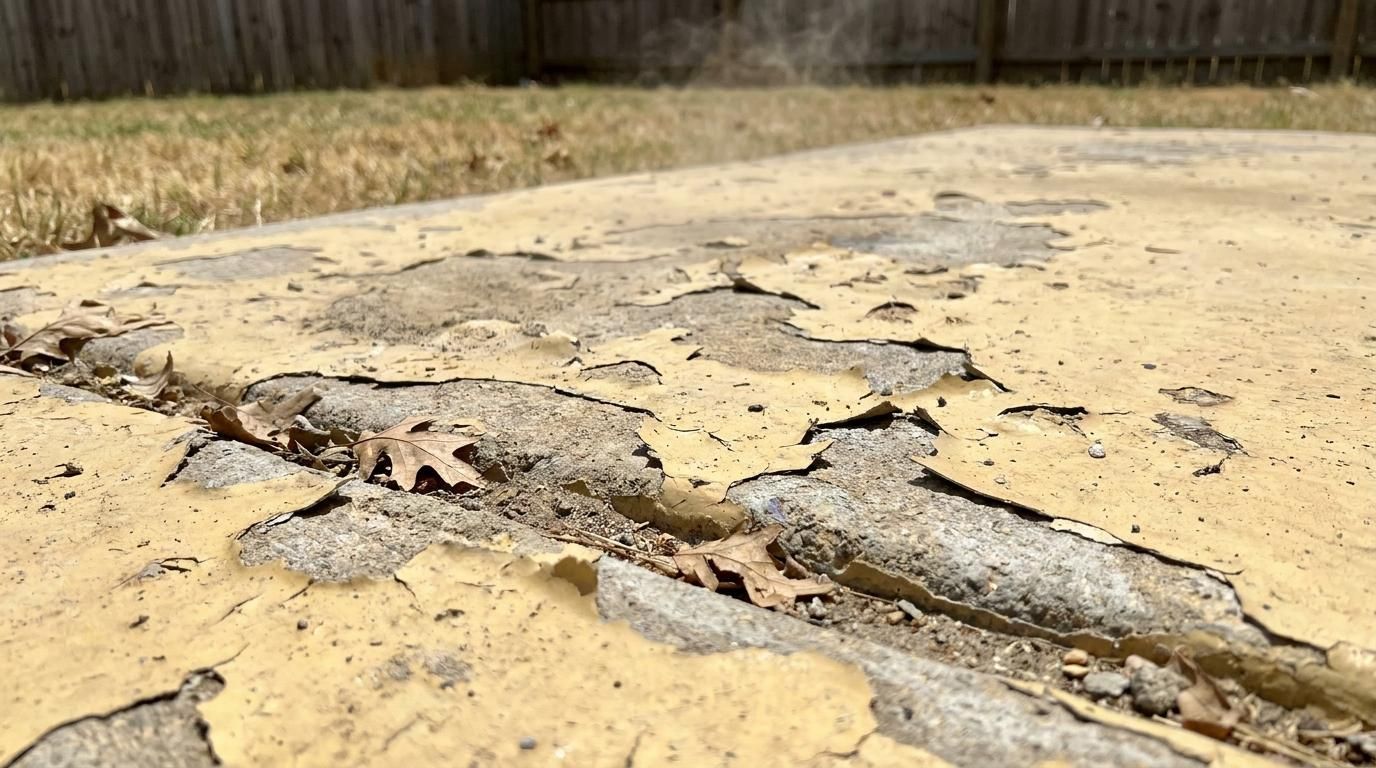
Floor paint is the cheapest option and the shortest-lived. In a humid NWA basement, painted concrete tends to peel and chip much sooner than a full coating system. It's acceptable for a rarely-used utility space, but not for a finished basement you actually live in.
Concrete Sealer
Concrete sealer is a clear penetrating product that blocks moisture partially and darkens the concrete slightly. It's invisible, cheap, and doesn't add any visual value to a finished space. Sealer alone is a reasonable choice if you want bare concrete as the finished look and just need moisture protection.
Polyurea and Polyaspartic Coating
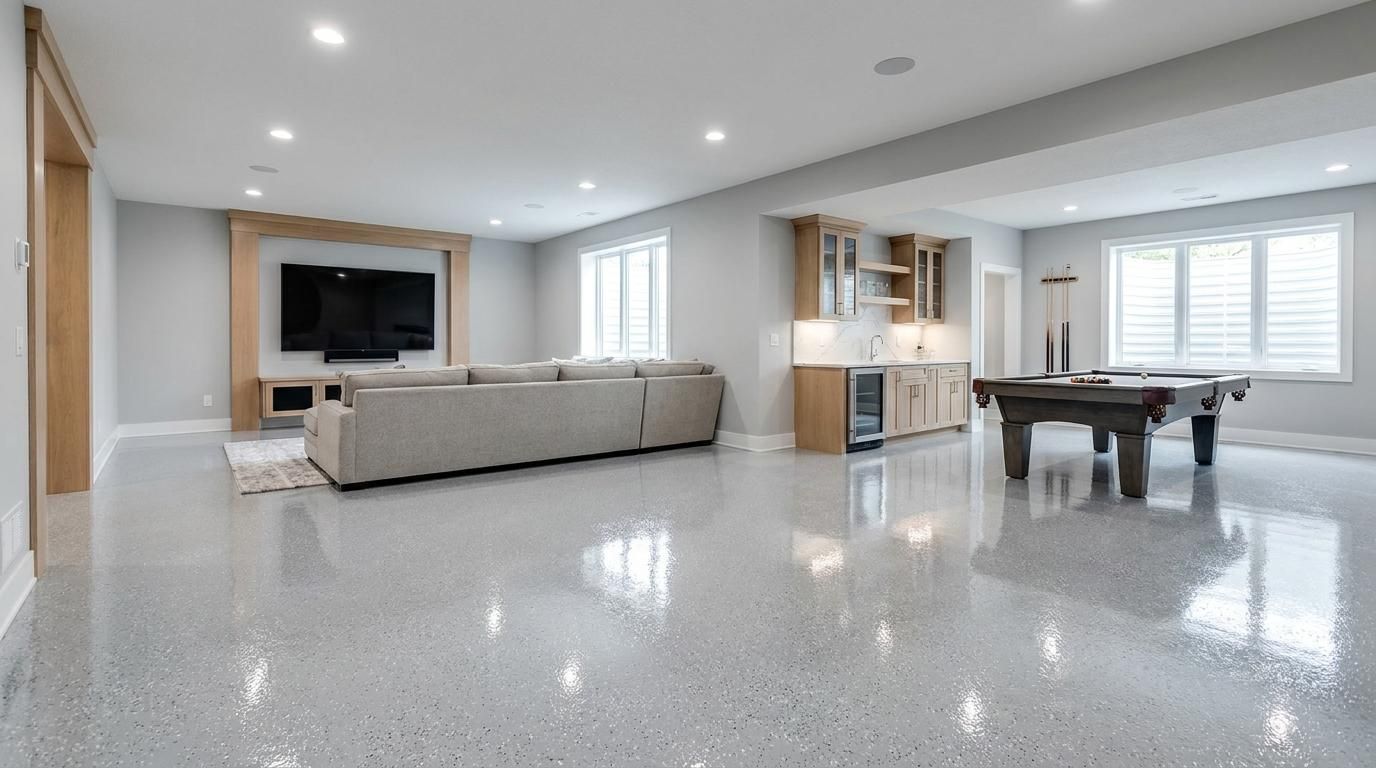
A full polyurea and polyaspartic coating system—materials that are 4x stronger than epoxy—is the right call for any basement you actually use as a living space. 12 Point Concrete Coatings installs basement floor coatings with moisture-blocking properties, decorative flake for color, and a polyaspartic topcoat that cleans up with soap and water.
Choosing the Right System for Your Basement Use
The right coating depends on how you plan to use the space.
For a home gym or workshop, prioritize slip resistance and impact tolerance. The flake broadcast system 12 Point uses gives traction even when the floor is sweaty or damp, and the polyurea layer absorbs impact from dropped weights or tools without cracking.
For a finished living area or family room, color and aesthetic matter more. Color consultation is included with every install — Chase brings samples to your home so you can see how different blends look against your existing wall color and furniture.
For a utility or laundry area, moisture resistance is the priority. Even here, polyurea's non-porous surface wins against paint or sealer because spills wipe up cleanly and standing water doesn't penetrate.
For the full range of
residential concrete coatings 12 Point installs, including basements, see our service overview.
Frequently Asked Questions
How much does a basement floor coating cost in Arkansas?
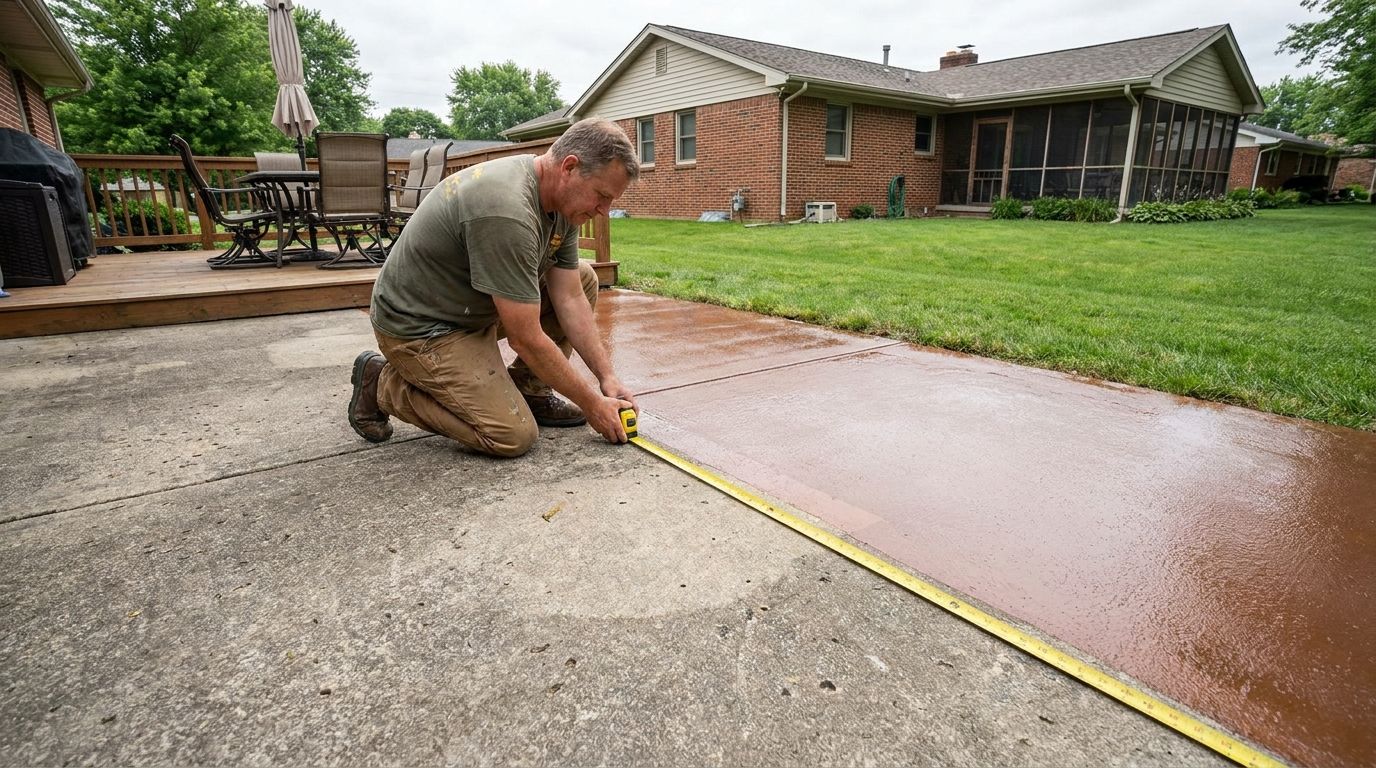
Basement floor coating pricing in NWA varies based on square footage, concrete condition, and color or flake selection, so costs should be confirmed through an on-site quote rather than a general range. 12 Point Concrete Coatings provides free on-site quotes so you can compare options before committing to the project.
Can basement coatings be installed on existing painted floors?
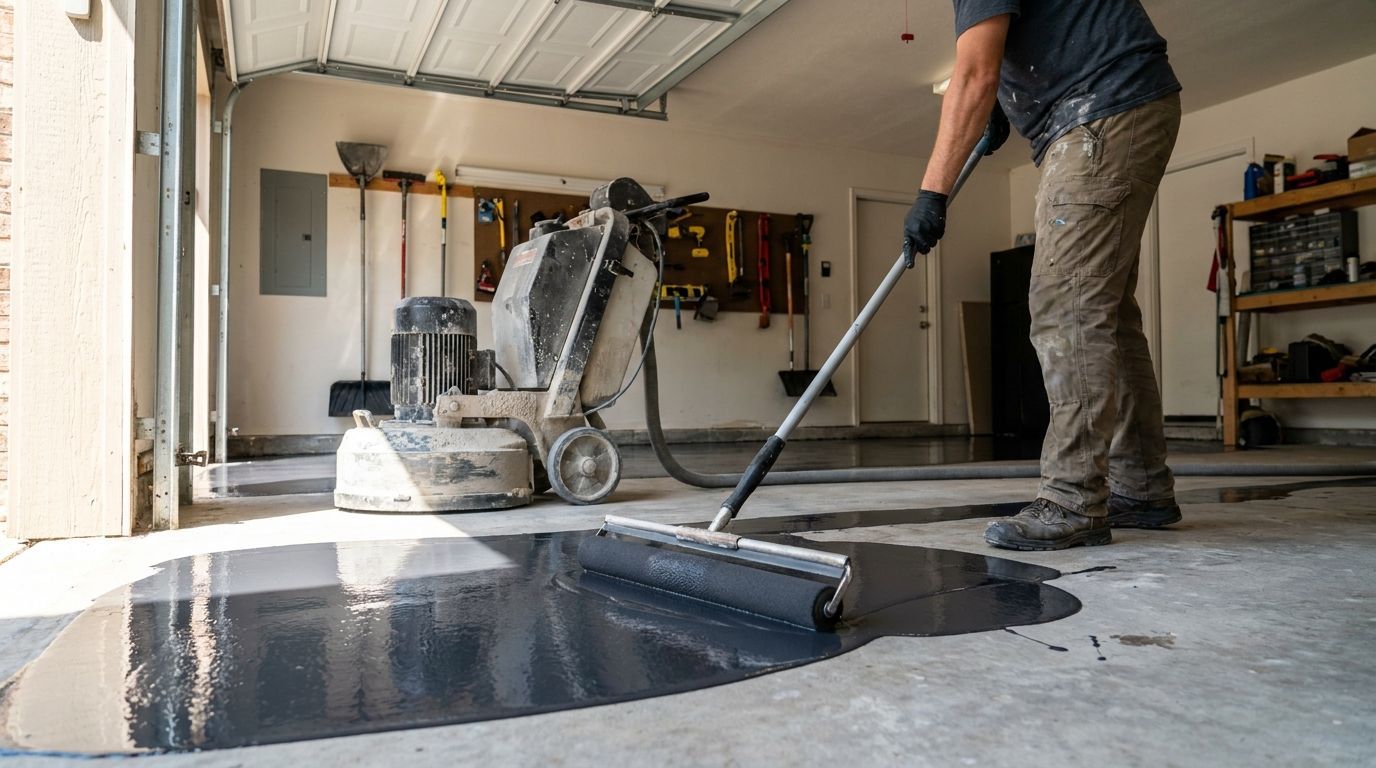
Existing paint has to be removed during surface preparation before a new coating is installed. 12 Point uses diamond-tooled grinders to strip old paint and open the concrete pores so the new polyurea base coat bonds directly to bare slab rather than a weakening paint layer.
Do polyurea basement coatings help prevent mold?
Polyurea coatings create a non-porous barrier that helps block moisture from rising through the slab, which reduces the damp surface conditions mold needs to grow. Sealing the floor is one of the more effective ways to help reduce basement mold risk in humid NWA climates.
Finish Your NWA Basement the Right Way
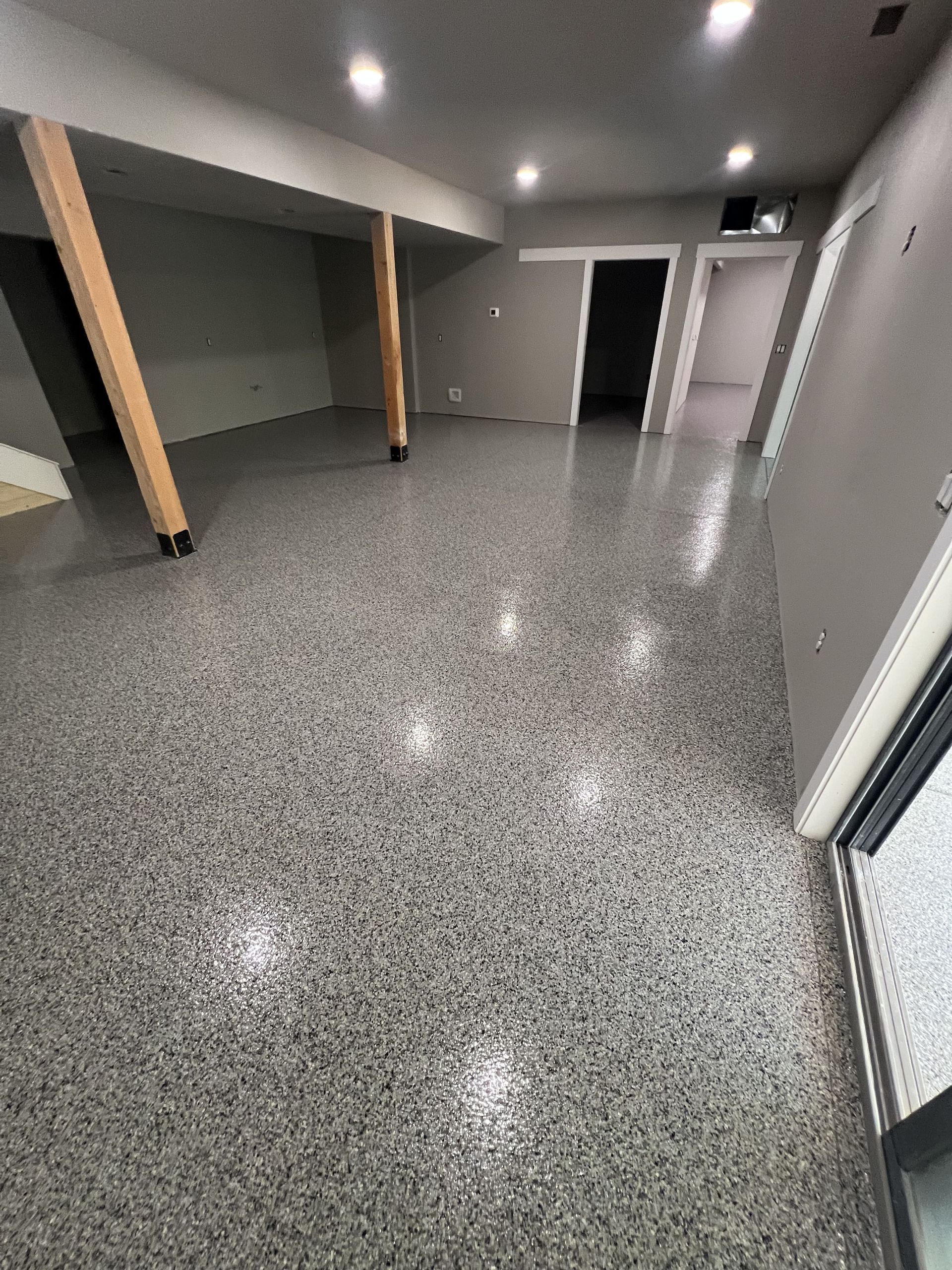
A basement floor coating in Arkansas has to handle humidity before anything else. Paint peels, sealer disappears into the slab, and epoxy cracks under temperature swings. A properly installed polyurea and polyaspartic system blocks moisture, flexes with the slab, and holds up to daily use.
Get a free quote from 12 Point Concrete Coatings today, and Chase or Brooke will walk your basement with you to recommend the right system based on how you plan to use the space.