5 Most Common Epoxy Floor Coating Problems Arkansas Homeowners Should Know About
The most common epoxy floor problems Arkansas homeowners encounter are yellowing from UV exposure, peeling and delamination, hot tire pickup, cracking from temperature swings, and moisture damage. These five failure modes show up repeatedly in NWA garages, basements, and patios. 12 Point Concrete Coatings installs polyurea and polyaspartic systems that avoid every one of them.
A homeowner in
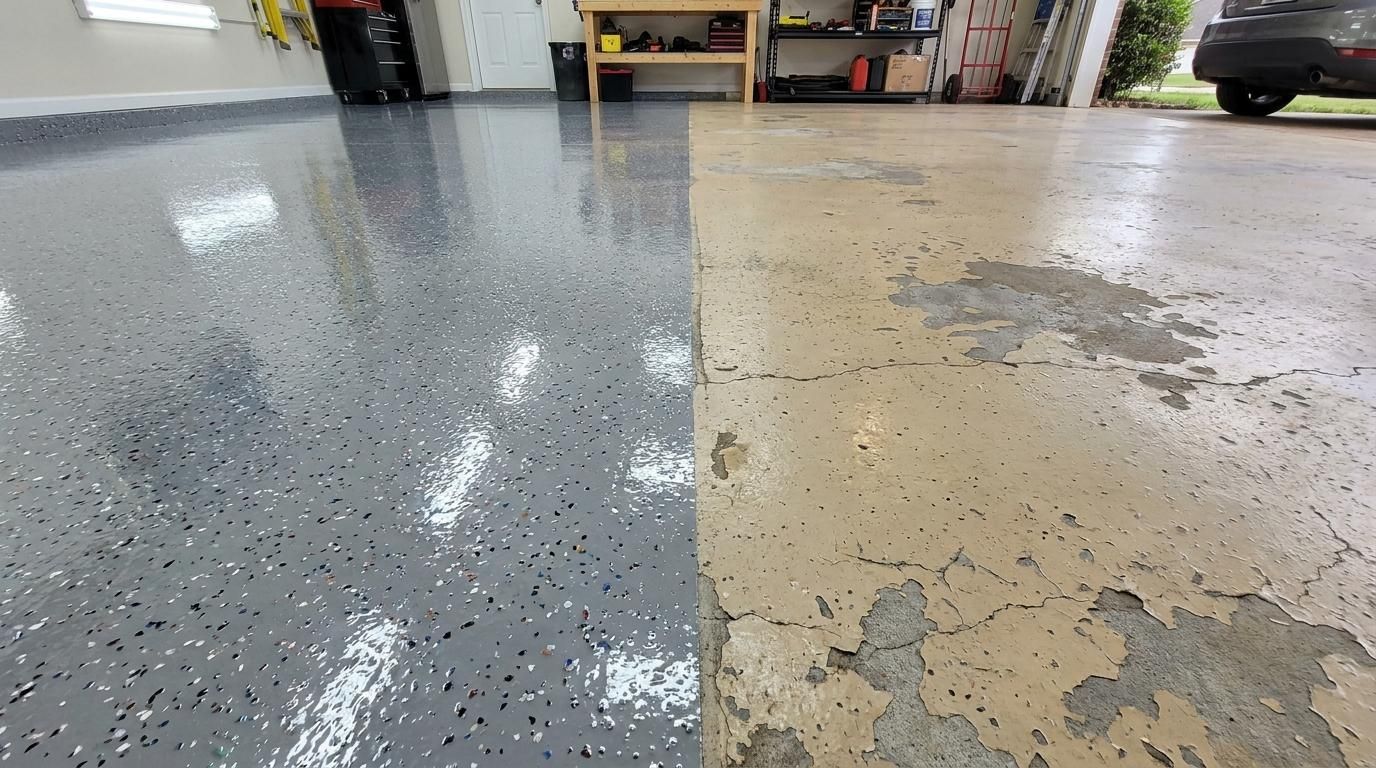
Rogers called us last fall about a garage floor they'd coated with a big-box-store epoxy kit two years earlier. The floor had yellowed in the spots where sunlight hit through the open door, peeled under the tires of their daily driver, and cracked along a hairline in the slab they'd never noticed before. Three problems from the same install. All predictable, and all preventable with the right material.
The 5 Epoxy Problems NWA Homeowners Encounter Most
Each of these shows up for a different reason, but they all trace back to epoxy's rigidity and porosity. A polyurea and polyaspartic system (materials that are 4x stronger than epoxy) is engineered to avoid all five.
1. Yellowing from UV Exposure
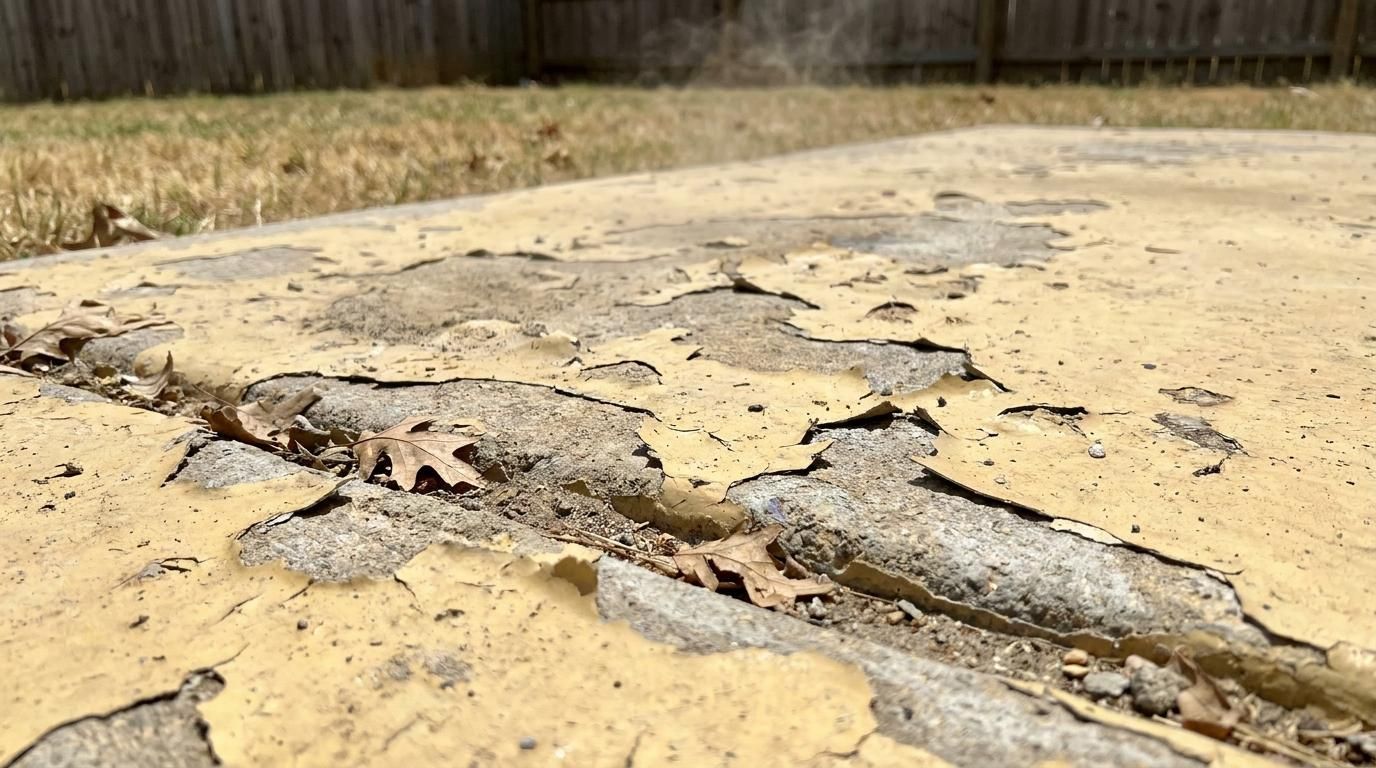
Standard epoxy isn't UV-stable. Direct sunlight through open garage doors, skylights, or patio installs triggers a chemical reaction that can turn white and light-colored epoxy yellow much sooner than homeowners expect. The yellowing is not reversible. Polyaspartic topcoats are UV-stable and carry a lifetime no-yellow warranty through Valence Protective Coatings. See what is polyaspartic floor coating for the material breakdown.
2. Peeling and Delamination
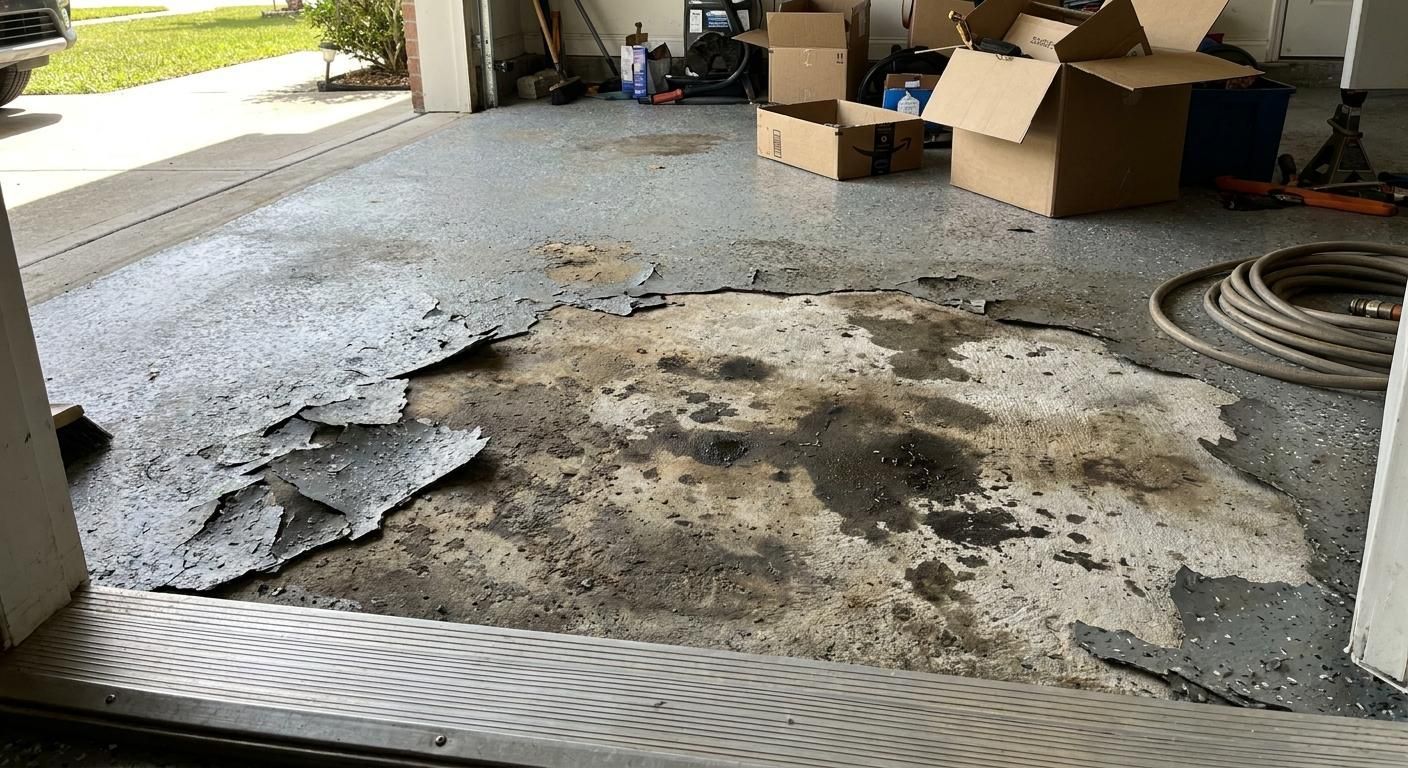
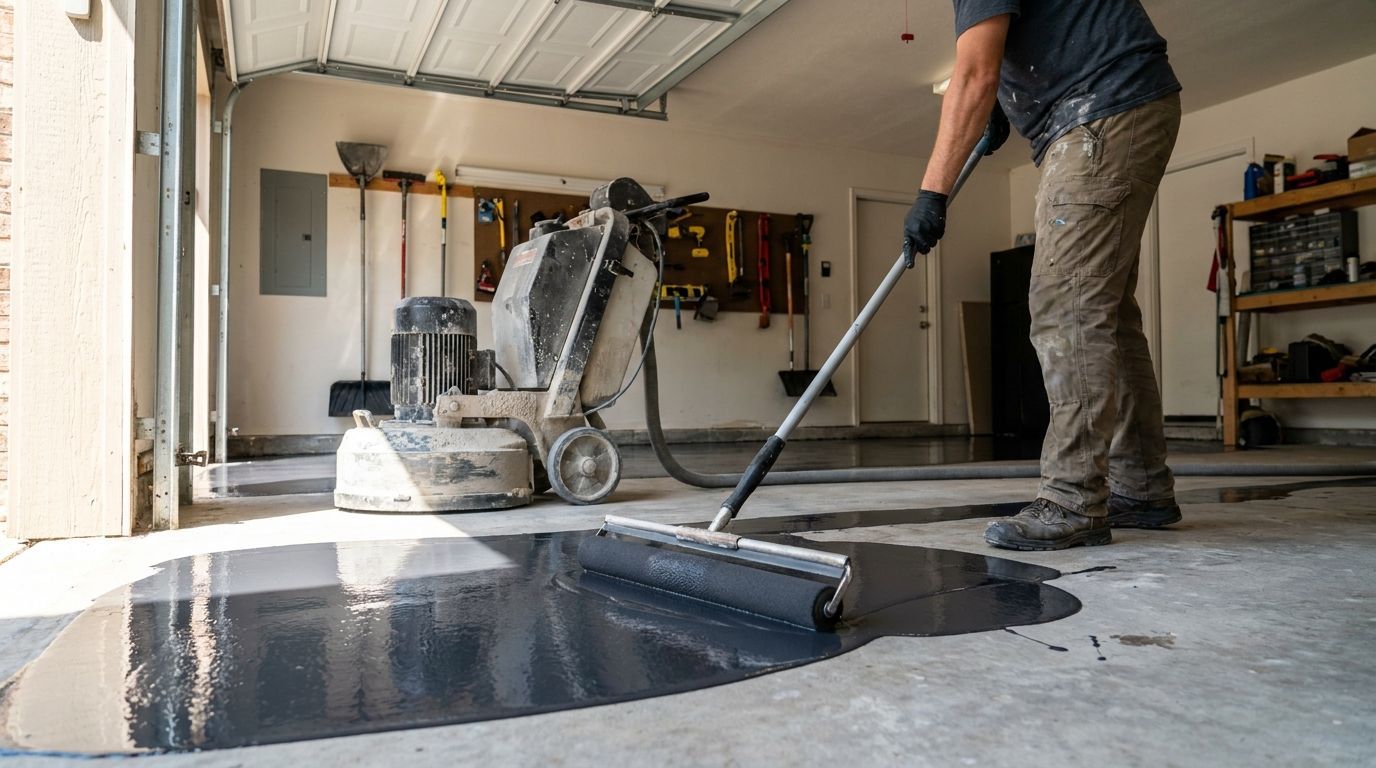
Epoxy peels when the bond between the coating and the concrete fails. This usually happens when the substrate wasn't prepped properly (DIY kits almost always skip the diamond grinding step) or when trapped moisture pushes the coating off from underneath. Polyurea penetrates deep into the concrete pores during application, forming a mechanical bond that resists delamination.
3. Hot Tire Pickup
This is a failure mode that surprises many garage owners. Tires heat up during driving, and when you pull into a hot garage, the tire rubber can temporarily bond to a heat-softened epoxy surface. When you back out, the coating can lift with the tire. Polyaspartic's chemistry is far more resistant to softening under tire heat, which helps prevent this issue.
4. Cracking from Temperature Swings
NWA summers can push garage floors well above outdoor highs inside closed spaces, and winter mornings can drop well below freezing. Concrete expands and contracts with those swings. Rigid epoxy is prone to cracking when the slab moves beneath it. Polyurea flexes with the concrete, which is why 12 Point Concrete Coatings installs it as the base layer on every residential concrete coating project. Read what is polyurea coating for more on the material's flexibility.
5. Moisture Damage and Blistering
In basements and slab-on-grade garages, moisture can rise from below. Epoxy tends to trap that moisture against the coating, and the pressure can cause blisters and bubbling on the surface. Polyurea is more moisture-tolerant during application and non-porous afterward, which helps keep moisture from collecting beneath it. The result is a finish that holds up better in humid NWA conditions.
What the Alternative Looks Like
A polyurea and polyaspartic system avoids these problems by design. Polyurea penetrates and flexes; polyaspartic seals, resists UV, and cures fast. Together, they handle what epoxy can't.
12 Point Concrete Coatings is a certified Valence Protective Coatings installer, which means every residential install comes with a 15-year performance warranty plus a lifetime no-yellow coverage. For a deeper look at which coatings last longest, check out our post on
the most durable concrete floor coating.
Frequently Asked Questions
Can a failed epoxy floor be re-coated with polyurea?
Yes, after the existing epoxy is ground off. 12 Point Concrete Coatings uses diamond-tooled grinders to remove old coatings and open the concrete pores before applying the new polyurea base. Re-coating directly over failing epoxy isn't recommended because the new coating inherits the old bond's weaknesses.
How long does polyurea last compared to epoxy in Arkansas?
Polyurea and polyaspartic systems installed by 12 Point carry a 15-year performance warranty from Valence Protective Coatings. Most epoxy garage floors in NWA tend to show visible wear much sooner due to the combination of heat, UV, and tire pickup. The service-life gap is significant.
Is a DIY epoxy kit ever a good idea for an NWA garage?
DIY epoxy kits skip the industrial-grade surface preparation that professional installs include, which is why most fail within a few years. For a garage that sees real use (daily vehicles, summer heat, winter cold), a professionally installed polyurea and polyaspartic system delivers better long-term value.
Avoid These Problems From the Start
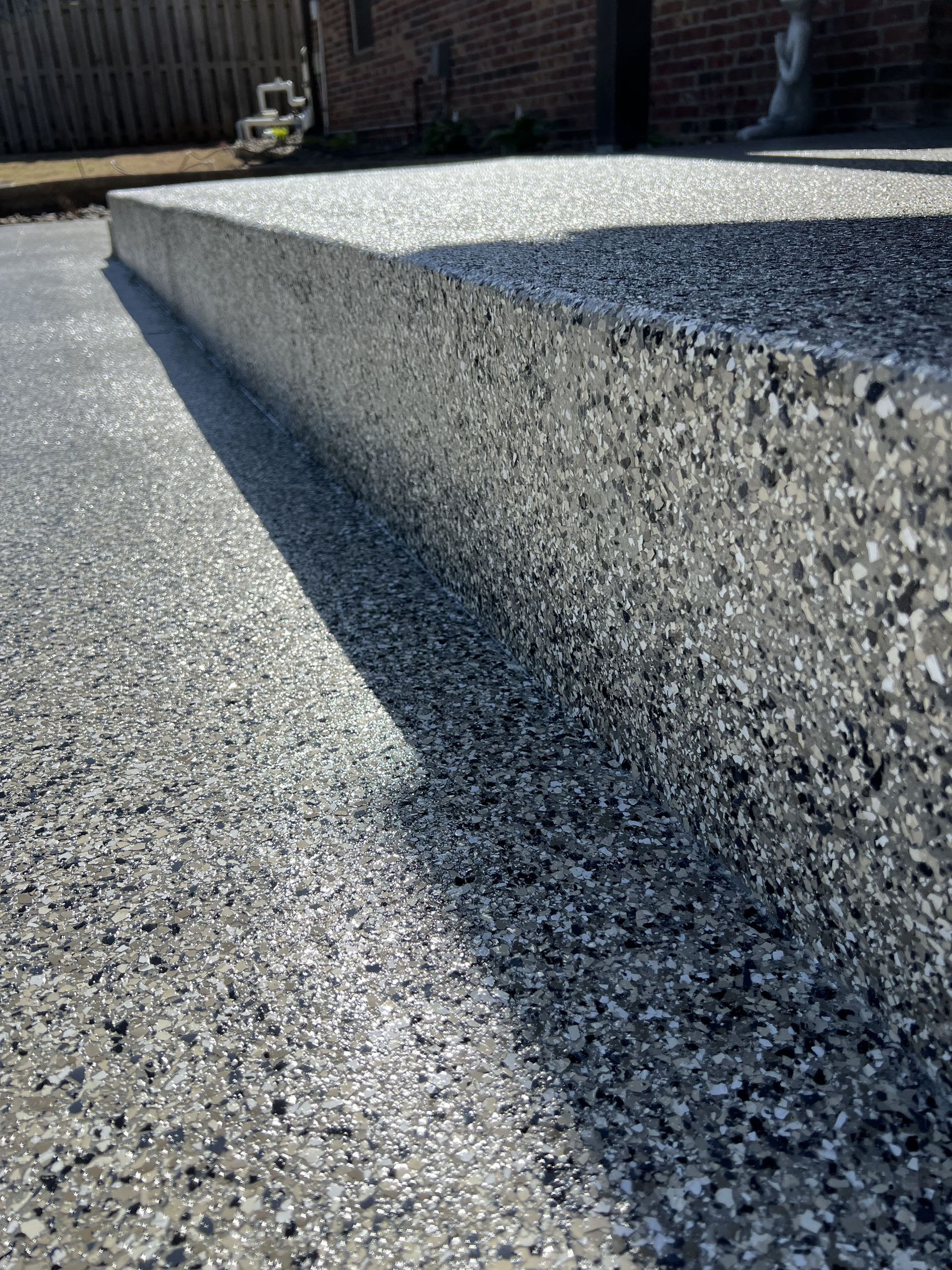
Epoxy's five common failure modes—yellowing, peeling, hot tire pickup, cracking, and moisture blistering—are predictable enough to plan around. Choosing a material engineered for Arkansas's climate helps address all five.
Get a free quote from 12 Point Concrete Coatings today. Chase and Brooke attend every consultation personally and explain exactly how the polyurea and polyaspartic system prevents these issues on your specific floor.